
Here in South Florida, the mosquitoes arrive right around the time we most want to start sitting outside. Right when the evening sky looks most beautiful, and the heat finally starts to let up for the day. And 20 minutes later… everyone is inside.
It’s a familiar enough trade that many South Floridian homeowners and property managers simply stop planning around their outdoor space at all—which is a considerable thing to give up on a property designed around it.The same thing plays out at restaurants, clubs, and communities across this part of the Sunshine State where an unusable patio or pool deck is a business problem as much as a comfort one, and it’s why mosquito misting systems for restaurants and hotels have become a standard part of how properties manage outdoor space down here.
An outdoor misting system for mosquitoes is a permanent installation that releases a fine mist of an approved product on a set schedule, treating the areas around an outdoor space where mosquitoes rest and gather. Tubing runs along fence lines, eaves, and landscape borders to fixed nozzles positioned during design, a controller governs the cycles, and a tank or product source supplies the solution.
Where those nozzles point is a defining decision in the design. A misting system treats the perimeter and the vegetation surrounding an outdoor area, working from the outside in. Nozzles are directed toward the areas where mosquitoes rest and travel, and away from the areas where people sit, dine, cook, and swim. Below, we’ll take a look at how the equipment operates, what a properly designed layout targets, which areas must remain outside the mist path, and how South Florida conditions influence a system installed here. This is general information. Any particular installation is governed by the directions on the product being used and by an evaluation of the property itself.
How an Outdoor Misting System Works
A pump moves a diluted solution through small-diameter tubing to a network of nozzles, each one atomizing the product into droplets fine enough to hang briefly in the air before settling onto the surrounding vegetation and structures. Mosquitoes resting in treated areas encounter the residue.
Performance, however, depends far less on the equipment than on where it was placed and when it runs. Two properties can install identical hardware and see very different results, according to nozzle placement, scheduling, and whether the conditions surrounding the space were addressed.
The Components
- Tank or product source. Holds the solution and is usually located in a utility area, side yard, or equipment enclosure with access for refills and inspection.
- Pump. Provides the pressure the nozzles need to produce a consistent mist. Pressure loss anywhere in the system shows up as poor performance across the whole network.
- Controller. Runs the cycles according to the programmed schedule. On larger properties it may operate separate zones independently.
- Tubing and fittings. Routed along fences, eaves, soffits, planters, and structural edges, generally concealed where the layout allows.
- Nozzles. Fixed at points chosen during design, aimed at specific target zones. Nozzle direction is set deliberately and should stay that way unless a technician adjusts it.
How a Cycle Runs
A cycle is short. The controller opens the system, the pump brings the lines up to pressure, the nozzles release for a set duration, and the system shuts down. Most properties run cycles at times of day when mosquito activity is elevated and the outdoor area is not in use.
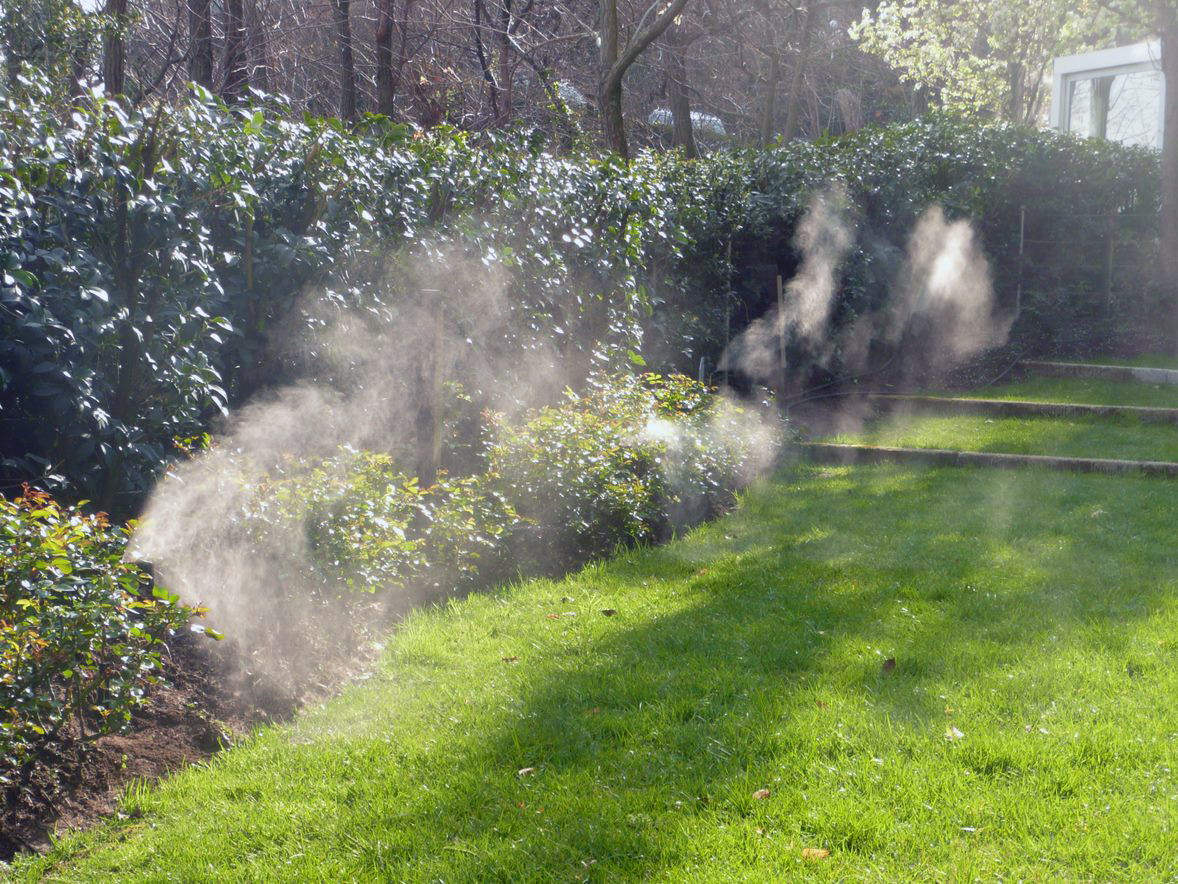
Timing is governed by the directions on the product being applied. Those directions determine when applications can occur, what has to be absent from the area, and how often the system may run. A schedule appropriate to one property will not necessarily transfer to another.
What the System Targets
Adult mosquitoes spend much of the day resting rather than flying. They gather in shaded, humid, sheltered places, and those locations are what a misting system is designed around.
A properly planned layout works outward from the space being protected, identifying the vegetation and structures that hold mosquitoes nearby and treating those instead of the occupied area itself.
Typical Target Zones
Perimeter landscaping and hedge lines. Shaded plantings and dense ground cover. Fence lines and the exterior edges of structures. Areas beneath decks and elevated walkways. Shaded borders where a lawn meets heavier vegetation. Approaches and entry routes where mosquitoes move toward an outdoor space.
Those zones share a common profile: shade, humidity, shelter from wind, and enough vegetation to hold moisture through the day.
Areas That Stay Outside the Mist Path
Some locations should never be in the path of a fixed nozzle, and identifying them is part of the design rather than an afterthought during installation.
| Exclusion area | Why it stays clear |
|---|---|
| People and pets | Occupied seating, gathering areas, play equipment, and pet areas remain outside the target path |
| Food and food-contact surfaces | Dining tables, grills and outdoor kitchens, prep surfaces, serving areas, glassware, and exposed food |
| Water | Pools, spas, ponds, water features, canals, and open water of any kind |
| Air intakes | HVAC intakes, vents, and openings that draw outside air into a building |
| Property boundaries | Neighboring property, shared walkways, sidewalks, and public rights-of-way |
| Edible plantings | Vegetable beds, herb gardens, and fruit trees, unless the product directions permit that use |
An outdoor area that cannot provide adequate separation from these may not be a suitable location for a fixed nozzle. That determination belongs to the site evaluation, before any equipment is installed.
Scheduled Cycles and On-Demand Use
Most systems run on a programmed schedule, and many also offer a remote or manual activation option. The two are not interchangeable in practice.
A programmed cycle is planned around the product directions and the times the area is unoccupied. On-demand activation puts that decision in someone’s hands in the moment, often when mosquitoes are noticed and people are outside, which is precisely the circumstance in which running the system may be inappropriate.
On-demand activation carries the same restrictions. A manual cycle must satisfy the same conditions as a scheduled one: the product directions, who and what is present in the area, prevailing wind, and the operating plan for the property. Anyone with access to that control should understand those limits.
What a Misting System Does Not Address
A misting system treats adult mosquitoes in the areas it reaches. It does not address where those mosquitoes are being produced, and on most South Florida properties, a meaningful share of them originate on the property itself.
Mosquitoes develop in standing water, and the quantity required is smaller than most people expect. A saucer under a potted plant, a clogged roof drain, a tarp with a low spot, a bromeliad holding water in its center, a neglected container behind a shed, a low area that stays wet after irrigation. Each of these can produce mosquitoes continuously through a warm season.
Source reduction therefore runs alongside the system rather than being replaced by it. Emptying and turning containers, clearing gutters and roof drains, correcting drainage that holds water, adjusting irrigation that overwaters, and keeping dense vegetation trimmed all reduce the pressure the system is asked to handle. A property with an unaddressed water source will keep producing mosquitoes regardless of how well the equipment is running.
South Florida Conditions
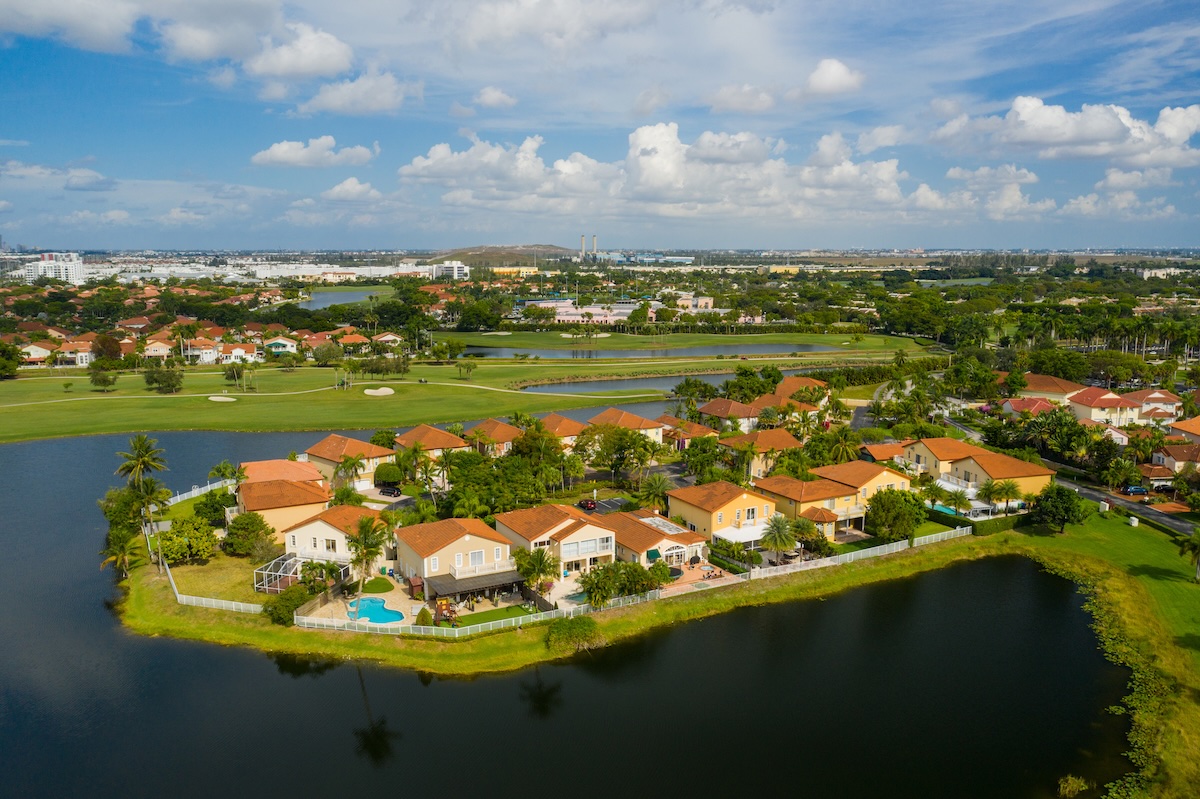
Systems installed here operate under conditions that differ from most of the country, and those conditions affect both the design and how often a system needs attention.
There is effectively no off-season. Warmth and humidity persist through the year, so mosquito pressure continues in months when properties further north would see none. Rainfall arrives heavily and often, refilling containers and low areas repeatedly through the wet season. Landscaping tends to be dense, with hedges, palms, and shaded plantings that hold humidity and provide resting habitat close to outdoor living areas.
Waterfront properties carry additional considerations. Canals, mangroves, and damp shoreline soil generate continuing pressure from beyond the property line, and no-see-ums are common in these areas alongside mosquitoes. Coastal wind affects where a nozzle can practically be aimed and whether the mist will stay within the intended zone, which sometimes rules out locations that would otherwise seem sensible.
Properties across Miami-Dade, Broward, Palm Beach, and Monroe counties can require noticeably different layouts for these reasons, even when the outdoor spaces themselves look similar.
Keeping a System Working
A misting system is outdoor equipment exposed to sun, rain, salt air, landscaping crews, and the ordinary changes a property goes through. It requires periodic attention to continue performing as designed.
Routine maintenance generally covers the solution level and refill, the condition of the tank, pump, controller, tubing, and fittings, nozzle cleaning or replacement, verification of the mist pattern and nozzle direction, and a check for leaks or unusual product consumption. Programming gets reviewed against how the property is currently being used.
Signs Something Needs Attention
Several indicators suggest a system has drifted from its original design. Product consumption that rises or falls noticeably. Visible dripping at a fitting or a nozzle. A nozzle producing a stream or a coarse spray instead of a fine mist. Plant growth that has closed over a nozzle or redirected its path. New furniture, seating, or an outdoor kitchen placed where a nozzle was aimed.
The last of these is common. Outdoor spaces are rearranged, landscaping fills in, and a layout that was correct at installation can end up directed somewhere it should not be. A system review following any significant change to the space keeps the design matched to the property.
Is an Outdoor Misting System a Fit for Your Space?
Fixed misting systems suit some outdoor areas and not others. A thorough evaluation establishes which before anything is installed.
The spaces that tend to work well have a defined perimeter with vegetation or structures that can be targeted, adequate separation between those targets and the areas where people gather, accessible locations for the tank and pump, and a use pattern that leaves windows when the area is unoccupied.
The situations that raise questions include outdoor areas with no suitable perimeter away from people, food, and water, spaces occupied more or less continuously, very open or exposed areas where wind carries the mist out of the intended zone, properties whose mosquito pressure is being driven by a drainage or standing water problem that has not been corrected, and equipment locations with no practical access for service.
An evaluation should also identify what the system will not solve on its own, so the property has a complete picture rather than a partial one.
Common Questions
Q: How does an outdoor misting system for mosquitoes work?
A: A pump moves a diluted solution through tubing to fixed nozzles positioned around an outdoor space. On a programmed cycle, those nozzles release a fine mist that settles onto surrounding vegetation and structures where adult mosquitoes rest. The system treats the perimeter and works inward, rather than being aimed at the area where people gather.
Q: Can the mist be directed over a patio or seating area?
A: No. Nozzles should not be aimed at occupied seating, dining tables, grills or outdoor kitchens, exposed food, food-contact surfaces, or the people using the space. A patio can still be served by a system that targets the landscaping, fence lines, and structural edges around it while keeping the seating area itself outside the mist path.
Q: Can a system be installed around a pool?
A: A pool area can be served by treating suitable perimeter zones such as hedges, fence lines, landscaped borders, and exterior building edges. Nozzles should not be directed toward the pool, spas, water features, or occupied furniture. Whether a particular deck has enough separation to allow this is a question for the site evaluation.
Q: Do I still need to deal with standing water?
A: Yes. A misting system treats adult mosquitoes in the areas it reaches and does nothing about where they are developing. Containers, saucers, clogged roof drains, tarps, bromeliads, and low areas that hold water after rain or irrigation can keep producing mosquitoes on the property.
Source reduction and the system work in concert. Removing standing water reduces the pressure the system is asked to manage.
Q: Does a misting system help with no-see-ums?
A: It may help reduce pressure in treated areas when the product being used is labeled for that pest. Waterfront and coastal properties need particular evaluation, because no-see-ums develop in wet soil, mangroves, and marsh habitat that cannot be addressed by removing containers of water the way mosquito breeding sites often can.
Q: How often does a system need service?
A: It depends on tank capacity, nozzle count, how often the system runs, and conditions on the property. Service typically covers refills, inspection of the tank, pump, controller, tubing and fittings, nozzle cleaning, and verification that the mist pattern and nozzle direction still match the design. A review following renovations, landscaping work, storm damage, or new outdoor furniture is advisable regardless of the service schedule.
An outdoor misting system for mosquitoes works by treating the perimeter around a space rather than the space itself, on a schedule built around the product directions and the way the area is used. Design, nozzle direction, and scheduling determine how well it performs, and source reduction on the property determines how much work it has to do.
Sniper Mosquito Solutions designs, installs, maintains, and services outdoor mosquito misting systems across South Florida, including residential properties and commercial spaces such as restaurants, hotels, communities, marinas, and event venues. A property evaluation can establish which outdoor areas can be treated and how a system should be customized.