
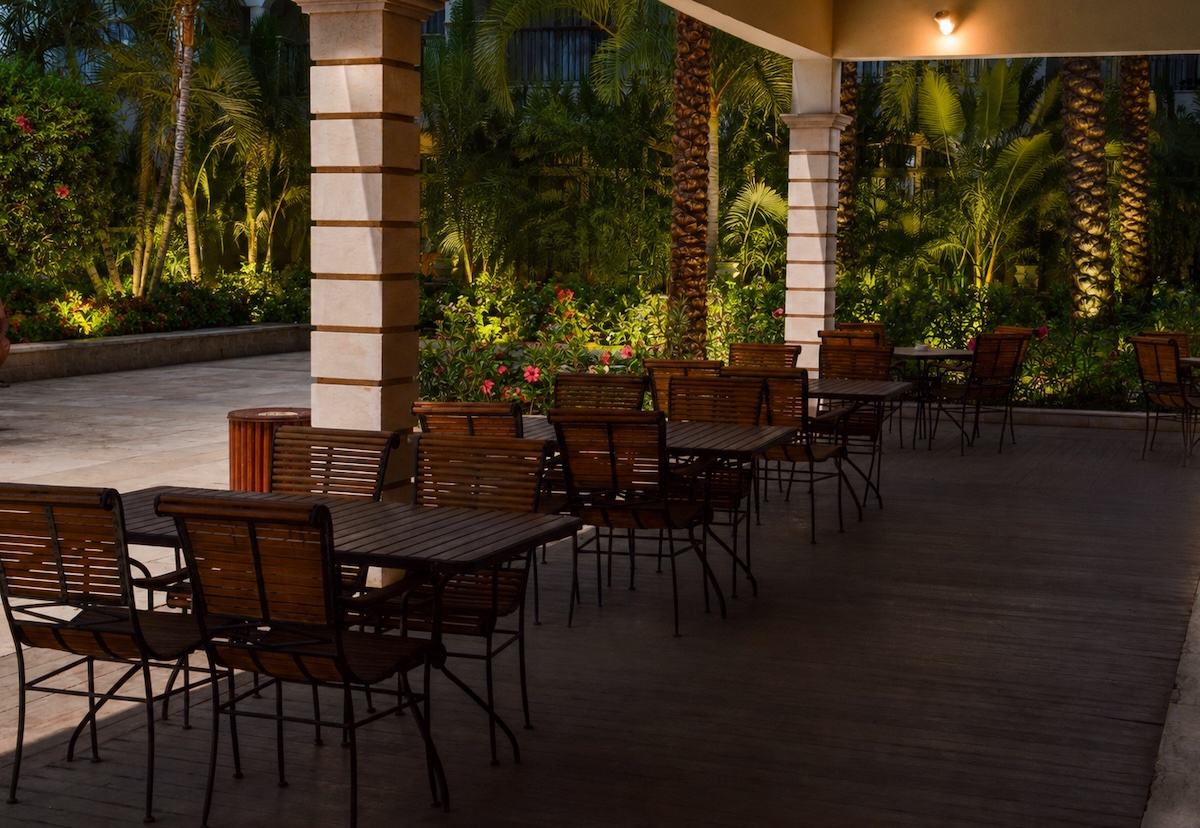
Outdoor Misting Systems for Mosquitoes
Here in South Florida, the mosquitoes arrive right around the time we most want to start sitting outside. Right when the evening sky looks most beautiful, and the heat finally starts to let up for the day. And 20 minutes later... everyone is inside.
It's a familiar enough trade that many South Floridian homeowners and property managers simply stop planning around their outdoor space at all—which is a considerable thing to give up on a property designed around it.The same thing plays out at restaurants, clubs, and communities across this part of the Sunshine State where an unusable patio or pool deck is a business problem as much as a comfort one, and it's why mosquito misting systems for restaurants and hotels have become a standard part of how properties manage outdoor space down here.
An outdoor misting system for mosquitoes is a permanent installation that releases a fine mist of an approved product on a set schedule, treating the areas around an outdoor space where mosquitoes rest and gather. Tubing runs along fence lines, eaves, and landscape borders to fixed nozzles positioned during design, a controller governs the cycles, and a tank or product source supplies the solution.
Where those nozzles point is a defining decision in the design. A misting system treats the perimeter and the vegetation surrounding an outdoor area, working from the outside in. Nozzles are directed toward the areas where mosquitoes rest and travel, and away from the areas where people sit, dine, cook, and swim. Below, we'll take a look at how the equipment operates, what a properly designed layout targets, which areas must remain outside the mist path, and how South Florida conditions influence a system installed here. This is general information. Any particular installation is governed by the directions on the product being used and by an evaluation of the property itself.
How an Outdoor Misting System Works
A pump moves a diluted solution through small-diameter tubing to a network of nozzles, each one atomizing the product into droplets fine enough to hang briefly in the air before settling onto the surrounding vegetation and structures. Mosquitoes resting in treated areas encounter the residue.
Performance, however, depends far less on the equipment than on where it was placed and when it runs. Two properties can install identical hardware and see very different results, according to nozzle placement, scheduling, and whether the conditions surrounding the space were addressed.
The Components
- Tank or product source. Holds the solution and is usually located in a utility area, side yard, or equipment enclosure with access for refills and inspection.
- Pump. Provides the pressure the nozzles need to produce a consistent mist. Pressure loss anywhere in the system shows up as poor performance across the whole network.
- Controller. Runs the cycles according to the programmed schedule. On larger properties it may operate separate zones independently.
- Tubing and fittings. Routed along fences, eaves, soffits, planters, and structural edges, generally concealed where the layout allows.
- Nozzles. Fixed at points chosen during design, aimed at specific target zones. Nozzle direction is set deliberately and should stay that way unless a technician adjusts it.
How a Cycle Runs
A cycle is short. The controller opens the system, the pump brings the lines up to pressure, the nozzles release for a set duration, and the system shuts down. Most properties run cycles at times of day when mosquito activity is elevated and the outdoor area is not in use.
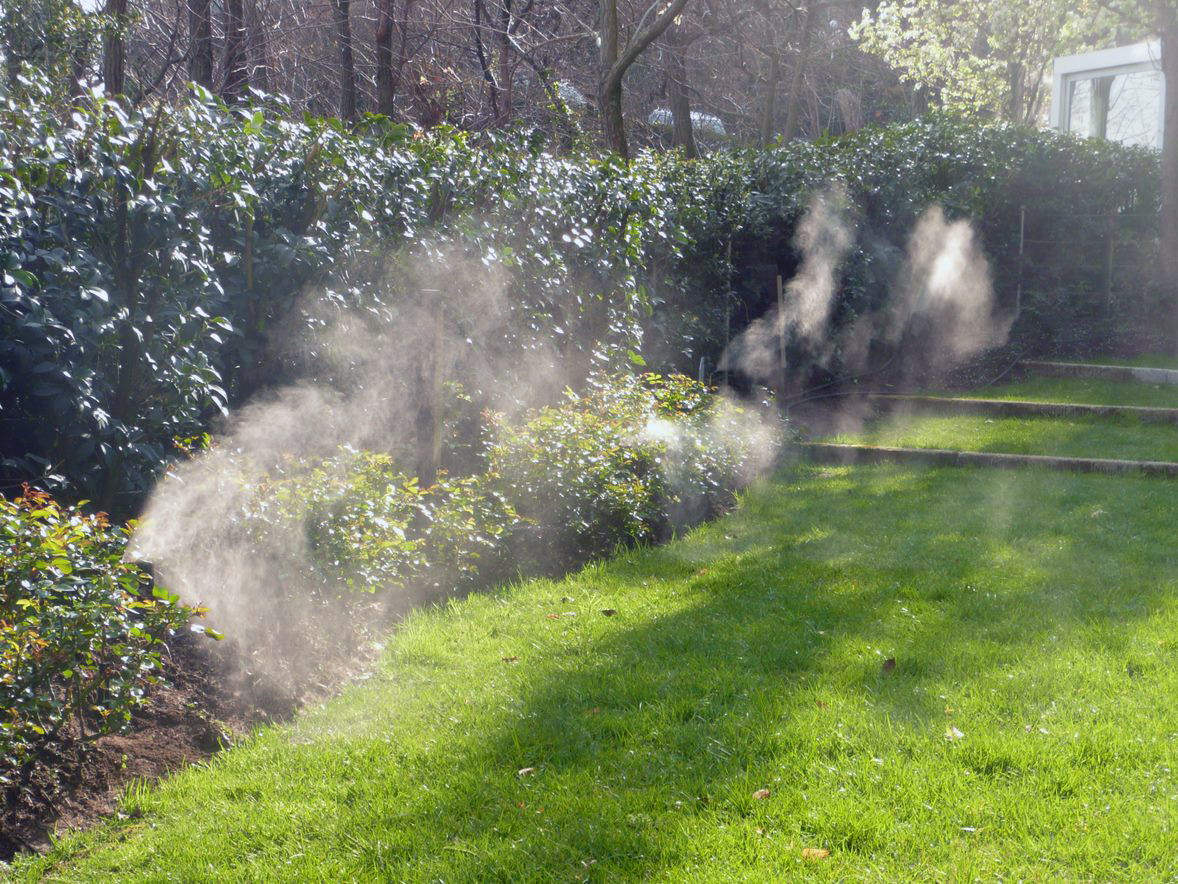
Timing is governed by the directions on the product being applied. Those directions determine when applications can occur, what has to be absent from the area, and how often the system may run. A schedule appropriate to one property will not necessarily transfer to another.
What the System Targets
Adult mosquitoes spend much of the day resting rather than flying. They gather in shaded, humid, sheltered places, and those locations are what a misting system is designed around.
A properly planned layout works outward from the space being protected, identifying the vegetation and structures that hold mosquitoes nearby and treating those instead of the occupied area itself.
Typical Target Zones
Perimeter landscaping and hedge lines. Shaded plantings and dense ground cover. Fence lines and the exterior edges of structures. Areas beneath decks and elevated walkways. Shaded borders where a lawn meets heavier vegetation. Approaches and entry routes where mosquitoes move toward an outdoor space.
Those zones share a common profile: shade, humidity, shelter from wind, and enough vegetation to hold moisture through the day.
Areas That Stay Outside the Mist Path
Some locations should never be in the path of a fixed nozzle, and identifying them is part of the design rather than an afterthought during installation.
| Exclusion area | Why it stays clear |
|---|---|
| People and pets | Occupied seating, gathering areas, play equipment, and pet areas remain outside the target path |
| Food and food-contact surfaces | Dining tables, grills and outdoor kitchens, prep surfaces, serving areas, glassware, and exposed food |
| Water | Pools, spas, ponds, water features, canals, and open water of any kind |
| Air intakes | HVAC intakes, vents, and openings that draw outside air into a building |
| Property boundaries | Neighboring property, shared walkways, sidewalks, and public rights-of-way |
| Edible plantings | Vegetable beds, herb gardens, and fruit trees, unless the product directions permit that use |
An outdoor area that cannot provide adequate separation from these may not be a suitable location for a fixed nozzle. That determination belongs to the site evaluation, before any equipment is installed.
Scheduled Cycles and On-Demand Use
Most systems run on a programmed schedule, and many also offer a remote or manual activation option. The two are not interchangeable in practice.
A programmed cycle is planned around the product directions and the times the area is unoccupied. On-demand activation puts that decision in someone's hands in the moment, often when mosquitoes are noticed and people are outside, which is precisely the circumstance in which running the system may be inappropriate.
On-demand activation carries the same restrictions. A manual cycle must satisfy the same conditions as a scheduled one: the product directions, who and what is present in the area, prevailing wind, and the operating plan for the property. Anyone with access to that control should understand those limits.
What a Misting System Does Not Address
A misting system treats adult mosquitoes in the areas it reaches. It does not address where those mosquitoes are being produced, and on most South Florida properties, a meaningful share of them originate on the property itself.
Mosquitoes develop in standing water, and the quantity required is smaller than most people expect. A saucer under a potted plant, a clogged roof drain, a tarp with a low spot, a bromeliad holding water in its center, a neglected container behind a shed, a low area that stays wet after irrigation. Each of these can produce mosquitoes continuously through a warm season.
Source reduction therefore runs alongside the system rather than being replaced by it. Emptying and turning containers, clearing gutters and roof drains, correcting drainage that holds water, adjusting irrigation that overwaters, and keeping dense vegetation trimmed all reduce the pressure the system is asked to handle. A property with an unaddressed water source will keep producing mosquitoes regardless of how well the equipment is running.
South Florida Conditions
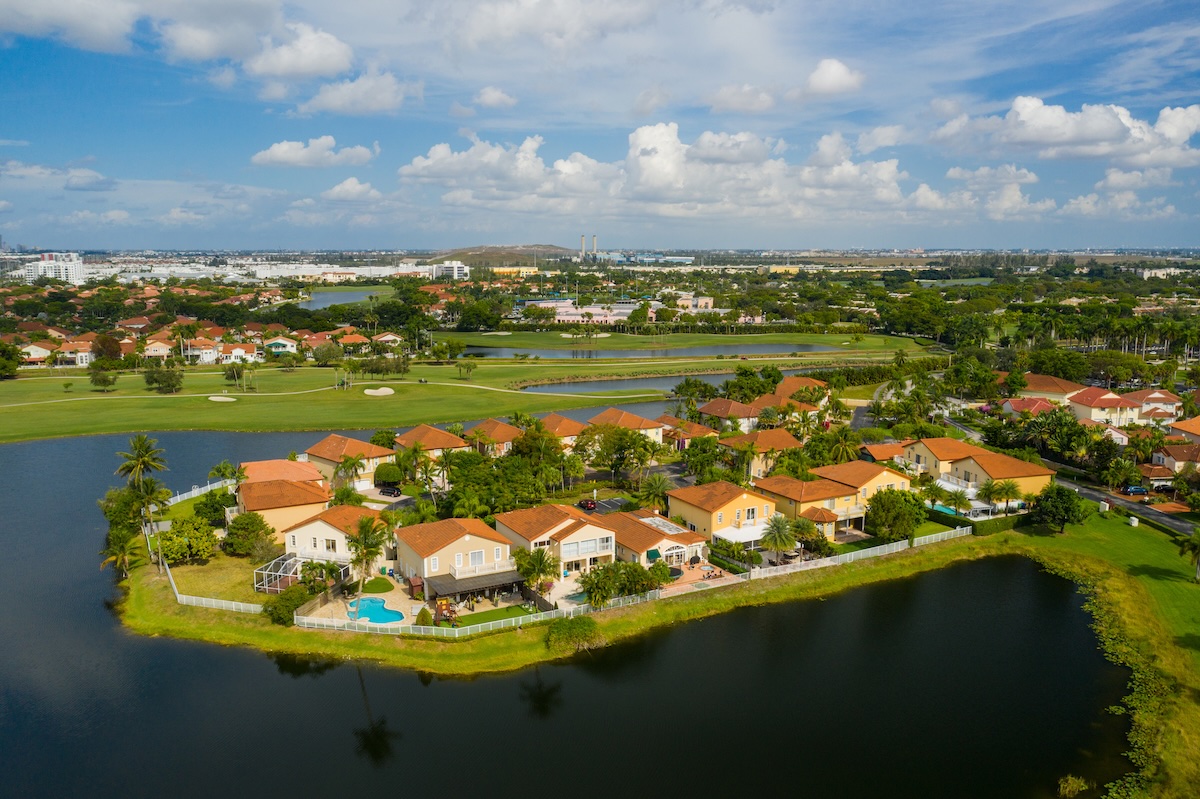
Systems installed here operate under conditions that differ from most of the country, and those conditions affect both the design and how often a system needs attention.
There is effectively no off-season. Warmth and humidity persist through the year, so mosquito pressure continues in months when properties further north would see none. Rainfall arrives heavily and often, refilling containers and low areas repeatedly through the wet season. Landscaping tends to be dense, with hedges, palms, and shaded plantings that hold humidity and provide resting habitat close to outdoor living areas.
Waterfront properties carry additional considerations. Canals, mangroves, and damp shoreline soil generate continuing pressure from beyond the property line, and no-see-ums are common in these areas alongside mosquitoes. Coastal wind affects where a nozzle can practically be aimed and whether the mist will stay within the intended zone, which sometimes rules out locations that would otherwise seem sensible.
Properties across Miami-Dade, Broward, Palm Beach, and Monroe counties can require noticeably different layouts for these reasons, even when the outdoor spaces themselves look similar.
Keeping a System Working
A misting system is outdoor equipment exposed to sun, rain, salt air, landscaping crews, and the ordinary changes a property goes through. It requires periodic attention to continue performing as designed.
Routine maintenance generally covers the solution level and refill, the condition of the tank, pump, controller, tubing, and fittings, nozzle cleaning or replacement, verification of the mist pattern and nozzle direction, and a check for leaks or unusual product consumption. Programming gets reviewed against how the property is currently being used.
Signs Something Needs Attention
Several indicators suggest a system has drifted from its original design. Product consumption that rises or falls noticeably. Visible dripping at a fitting or a nozzle. A nozzle producing a stream or a coarse spray instead of a fine mist. Plant growth that has closed over a nozzle or redirected its path. New furniture, seating, or an outdoor kitchen placed where a nozzle was aimed.
The last of these is common. Outdoor spaces are rearranged, landscaping fills in, and a layout that was correct at installation can end up directed somewhere it should not be. A system review following any significant change to the space keeps the design matched to the property.
Is an Outdoor Misting System a Fit for Your Space?
Fixed misting systems suit some outdoor areas and not others. A thorough evaluation establishes which before anything is installed.
The spaces that tend to work well have a defined perimeter with vegetation or structures that can be targeted, adequate separation between those targets and the areas where people gather, accessible locations for the tank and pump, and a use pattern that leaves windows when the area is unoccupied.
The situations that raise questions include outdoor areas with no suitable perimeter away from people, food, and water, spaces occupied more or less continuously, very open or exposed areas where wind carries the mist out of the intended zone, properties whose mosquito pressure is being driven by a drainage or standing water problem that has not been corrected, and equipment locations with no practical access for service.
An evaluation should also identify what the system will not solve on its own, so the property has a complete picture rather than a partial one.
Common Questions
Q: How does an outdoor misting system for mosquitoes work?
A: A pump moves a diluted solution through tubing to fixed nozzles positioned around an outdoor space. On a programmed cycle, those nozzles release a fine mist that settles onto surrounding vegetation and structures where adult mosquitoes rest. The system treats the perimeter and works inward, rather than being aimed at the area where people gather.
Q: Can the mist be directed over a patio or seating area?
A: No. Nozzles should not be aimed at occupied seating, dining tables, grills or outdoor kitchens, exposed food, food-contact surfaces, or the people using the space. A patio can still be served by a system that targets the landscaping, fence lines, and structural edges around it while keeping the seating area itself outside the mist path.
Q: Can a system be installed around a pool?
A: A pool area can be served by treating suitable perimeter zones such as hedges, fence lines, landscaped borders, and exterior building edges. Nozzles should not be directed toward the pool, spas, water features, or occupied furniture. Whether a particular deck has enough separation to allow this is a question for the site evaluation.
Q: Do I still need to deal with standing water?
A: Yes. A misting system treats adult mosquitoes in the areas it reaches and does nothing about where they are developing. Containers, saucers, clogged roof drains, tarps, bromeliads, and low areas that hold water after rain or irrigation can keep producing mosquitoes on the property.
Source reduction and the system work in concert. Removing standing water reduces the pressure the system is asked to manage.
Q: Does a misting system help with no-see-ums?
A: It may help reduce pressure in treated areas when the product being used is labeled for that pest. Waterfront and coastal properties need particular evaluation, because no-see-ums develop in wet soil, mangroves, and marsh habitat that cannot be addressed by removing containers of water the way mosquito breeding sites often can.
Q: How often does a system need service?
A: It depends on tank capacity, nozzle count, how often the system runs, and conditions on the property. Service typically covers refills, inspection of the tank, pump, controller, tubing and fittings, nozzle cleaning, and verification that the mist pattern and nozzle direction still match the design. A review following renovations, landscaping work, storm damage, or new outdoor furniture is advisable regardless of the service schedule.
An outdoor misting system for mosquitoes works by treating the perimeter around a space rather than the space itself, on a schedule built around the product directions and the way the area is used. Design, nozzle direction, and scheduling determine how well it performs, and source reduction on the property determines how much work it has to do.
Sniper Mosquito Solutions designs, installs, maintains, and services outdoor mosquito misting systems across South Florida, including residential properties and commercial spaces such as restaurants, hotels, communities, marinas, and event venues. A property evaluation can establish which outdoor areas can be treated and how a system should be customized.

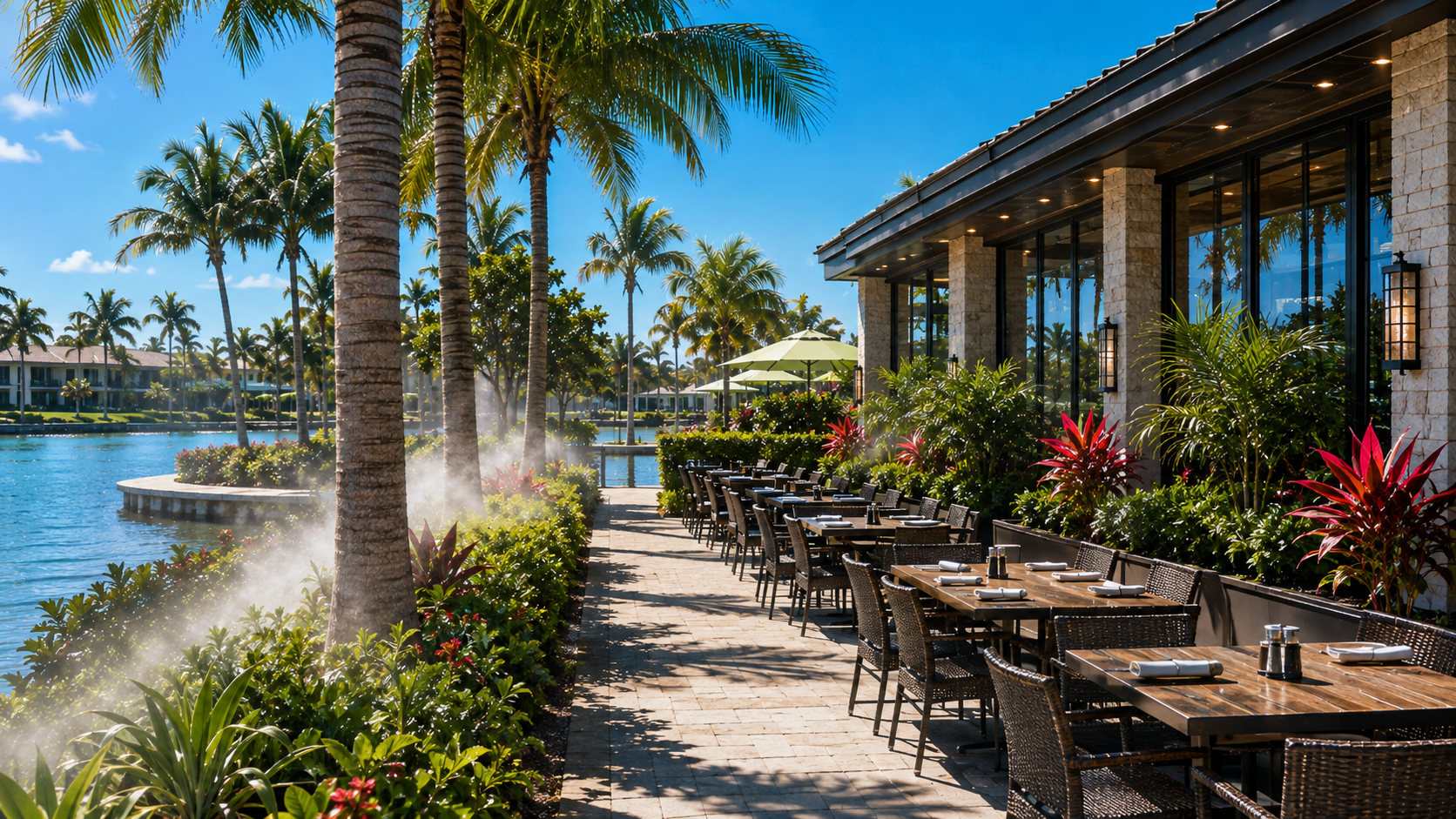
Commercial Mosquito Misting Systems for South Florida Outdoor Spaces
A commercial mosquito misting system helps reduce mosquito and no-see-um pressure around outdoor business spaces by treating the surrounding perimeter, landscaping, shaded resting areas, entry points, and other carefully selected exterior zones. It should not be designed to mist directly over customers, employees, dining tables, exposed food, cooking areas, swimming pools, ponds, or active work areas. Sniper Mosquito Solutions provides commercial mosquito misting system installation, maintenance, refills, and service transitions for restaurants, hotels, resorts, HOAs, condominium communities, apartment properties, event venues, country clubs, marinas, offices, retail properties, and other South Florida businesses. Each system is designed around the property’s layout, operating hours, customer traffic, outdoor-use areas, environmental conditions, and product-label requirements. The result is a permanent, serviceable mosquito-control system that supports outdoor operations without relying only on one-time treatments.
What a Commercial Mosquito Misting System Does
A commercial mosquito misting system provides scheduled adult mosquito control around selected outdoor areas. The system uses a central tank or product source, pump, controller, tubing, fittings, and fixed nozzles to release a fine mist into the areas where mosquitoes rest, enter, and gather near customer or employee spaces.
The system is not intended to coat every outdoor surface. A properly designed commercial installation concentrates on the exterior zones that contribute to mosquito pressure while maintaining separation from food, water, occupied areas, air intakes, neighboring properties, and other locations where mist should not be directed.
- Automatic operation: The controller runs approved misting cycles according to the property schedule and applicable product directions.
- Property-specific coverage: Nozzles are placed according to the business layout rather than a standard residential template.
- Commercial zoning: Different outdoor areas can be evaluated separately based on customer use, operating hours, and mosquito pressure.
- Ongoing service: Refills, nozzle inspections, pump checks, tubing reviews, programming adjustments, and part replacement help keep the system reliable.
- Existing system support: A commercial system installed by another provider can be inspected and evaluated for service takeover.
The system works best as one part of a broader commercial mosquito-control plan that also addresses standing water, drainage, irrigation, plant growth, neglected containers, blocked roof drains, and other conditions that allow mosquitoes to develop near the property.
Where Commercial Misting Nozzles Should and Should Not Be Directed
Commercial misting nozzles should be directed toward mosquito pressure zones around an outdoor space, not toward the people and activities inside it. The system protects a customer-facing area from the outside in by targeting nearby landscaping, perimeter structures, shaded edges, and mosquito entry routes.
| Commercial Area | Potential Treatment Zones | Areas to Avoid |
|---|---|---|
| Restaurant patio | Perimeter landscaping, fence lines, exterior structure edges, shaded vegetation, and patio approaches. | Dining tables, exposed food, serving stations, cooking areas, guests, employees, and food-contact surfaces. |
| Outdoor bar | Landscape borders, exterior walls, overhang edges, entrance approaches, and surrounding vegetation. | Bar tops, glassware, beverage stations, food service areas, occupied seating, and air intakes. |
| Hotel or resort pool area | Hedges, perimeter fences, landscaped borders, exterior building edges, walkways, and vegetation surrounding the deck. | The swimming pool, spas, occupied cabanas, lounge furniture, food service areas, and guests. |
| HOA or condominium amenity | Clubhouse perimeter, fence lines, shaded plantings, walkway edges, and landscaped borders around common areas. | Pools, play equipment, occupied seating, pet areas, food stations, and resident activity zones during use. |
| Event venue | Venue perimeter, landscaped edges, exterior tent boundaries, fence lines, shaded vegetation, and service approaches. | Occupied ceremony areas, dining tables, food preparation areas, bars, guests, and exposed event materials. |
| Marina or yacht club | Landward landscaping, clubhouse perimeter, dock approaches, parking edges, exterior walls, and shaded gathering-area borders. | Canals, marina basins, open water, boats, food service areas, customers, and direct over-water application. |
| Office or retail courtyard | Planter edges, exterior walls, shaded landscaping, covered walkway borders, and perimeter gathering areas. | Occupied tables, employees, customers, air intakes, public sidewalks, and food or beverage areas. |
| Warehouse or industrial property | Employee patio perimeter, fence lines, vegetation, shaded building edges, service-yard borders, and exterior break-area approaches. | Workers, exposed products, food-receiving areas, loading activity, ventilation intakes, and stormwater systems. |
The final nozzle layout depends on the product selected for the system, the instructions on its label, the property’s operating conditions, and the technician’s evaluation. A location that cannot provide suitable separation from food, water, people, neighboring property, or sensitive areas may not be appropriate for a fixed misting nozzle.
Can a Mosquito Misting System Be Used Around a Restaurant Patio?
A restaurant patio can be a strong candidate for commercial mosquito control, but the system should not mist directly over diners or tables. The correct design targets the outdoor perimeter and nearby mosquito resting areas while keeping nozzles directed away from eating areas, cooking areas, exposed food, serving surfaces, employees, and customers.
Potential restaurant treatment zones can include landscaped patio borders, exterior fencing, shaded vegetation, building edges, covered walkway approaches, and other areas that contribute to mosquito movement around the patio. The treatment plan should also account for back-of-house drainage, planters, roof drains, utility areas, and containers that may hold water after rainfall.
The system schedule must follow the directions for the product being used. Commercial programming can be structured around opening times, closing procedures, food-service preparation, cleaning, deliveries, patio setup, and other operating windows so the system does not run during an inappropriate period.
Restaurant Areas That Require Special Planning
Food-service properties require a more detailed operating plan because customer seating and exposed food may remain present through much of the day and evening.
- Dining tables: Nozzles should not be aimed toward tables, chairs, table settings, or dining surfaces.
- Outdoor kitchens: Cooking appliances, food-preparation surfaces, service windows, and exposed ingredients should remain outside the mist path.
- Bars and beverage stations: Glassware, drink preparation, ice, garnishes, and bar surfaces require separation.
- Covered patios: Roofs, walls, screens, fans, and air movement can change how mist travels and must be considered during design.
- Opening and closing schedules: The controller should be programmed around the restaurant’s actual operations rather than a generic residential schedule.
- Shared property lines: Adjacent sidewalks, neighboring patios, parking areas, and public spaces must be considered.
A restaurant system should be designed as commercial operating equipment. Management should know when it runs, which zones it serves, how to prevent unauthorized activation, and who to contact when the operating schedule or patio layout changes.
Commercial Properties That May Benefit From a Misting System
The strongest commercial candidates are properties where outdoor space supports customer experience, resident amenities, events, recreation, employee use, or daily business operations. The property must also have suitable perimeter areas where a system can be installed and operated according to label directions.
Hotels and Resorts
Hotels and resorts may need mosquito control around outdoor lounges, courtyard edges, landscaped walkways, cabana perimeters, pool-area borders, event terraces, entry areas, and guest gathering spaces. Nozzles should remain directed away from pools, occupied furniture, food service, and guests.
Because hospitality properties can remain active throughout the day, the design may require separate treatment zones and carefully selected operating windows. A single schedule for an entire resort is rarely as useful as a plan built around the actual use of each outdoor area.
HOAs, Condominiums, and Apartment Communities
Community properties may use commercial mosquito misting systems around clubhouse landscaping, pool-perimeter vegetation, fence lines, shaded common-area borders, mail pavilion approaches, walking-area edges, and other resident-facing outdoor spaces.
The community’s board, manager, or maintenance team should understand which areas are included, when the system operates, how residents are kept away during application periods, and how service records or maintenance requests are handled.
Event and Wedding Venues
Event properties may need mosquito control around ceremony lawns, cocktail-area perimeters, landscaped courtyards, tent boundaries, outdoor bars, garden paths, parking approaches, and reception-space borders. The system should be programmed around event setup, vendor arrivals, guests, food service, cleanup, and breakdown.
An automated system can be especially useful for venues that host outdoor events repeatedly, but it must not be manually triggered while guests, workers, food, or other restricted elements are present when the applicable product label prohibits that use.
Country Clubs and Outdoor Recreation Properties
Country clubs, tennis facilities, pickleball clubs, golf properties, and private recreational facilities may need coverage around clubhouse terraces, court-perimeter landscaping, cart staging areas, shaded seating borders, outdoor event areas, and walkway approaches.
The treatment plan should account for early-morning activity, evening events, food and beverage service, maintenance crews, members, tournaments, and outdoor operating schedules.
Marinas, Yacht Clubs, and Waterfront Businesses
Waterfront commercial properties often experience persistent mosquito and no-see-um pressure from canals, mangroves, wet soil, dense planting, and nearby coastal habitat. Suitable treatment areas may include landward landscaping, clubhouse exteriors, dock approaches, shaded seating borders, parking edges, and building perimeters.
Nozzles should not be directed toward canals, marina basins, ponds, or other water bodies. Wind direction and coastal airflow also require close attention because they can move mist away from the intended target.
Office Campuses and Retail Properties
Office and retail properties may need mosquito control around courtyards, employee patios, building entrances, shaded walkways, outdoor waiting areas, landscape-heavy plazas, and perimeter seating zones.
These systems should be coordinated with business hours, cleaning crews, deliveries, landscaping, HVAC operation, pedestrian traffic, and any food or beverage use within the outdoor space.
Warehouses and Industrial Properties
Commercial mosquito pressure can also affect loading teams, security staff, maintenance employees, drivers, and workers using outdoor break areas. A system may target employee patio borders, perimeter vegetation, exterior walls, fence lines, service-yard edges, and shaded areas near the building.
Food receiving, exposed inventory, active loading areas, workers, drainage systems, and ventilation intakes require clear separation from the mist path.
How a Commercial Mosquito Misting System Is Designed
A commercial system begins with a property-use map, not a nozzle count. The installer must understand where mosquitoes are concentrated, where customers and employees spend time, when each area is occupied, and where the system can operate responsibly.
- Map the outdoor operation. Identify dining, recreation, events, employee areas, walkways, service zones, pools, water features, loading activity, food service, and peak traffic periods.
- Identify mosquito pressure zones. Inspect shaded vegetation, perimeter landscaping, fence lines, roof drainage, low areas, utility spaces, standing-water sources, canals, and nearby habitat.
- Establish exclusion zones. Mark eating and cooking areas, exposed food, water bodies, air intakes, play equipment, neighboring property, public rights-of-way, and other sensitive areas.
- Develop the nozzle layout. Position nozzles around suitable target zones while accounting for wind, visual impact, tubing routes, pressure, service access, and future plant growth.
- Divide the property into operating zones. Separate areas with different schedules, uses, and exposure concerns when the equipment supports zoning.
- Program around business operations. Configure the system according to product-label directions and the business’s opening, closing, service, maintenance, and event schedule.
- Establish ongoing service. Define refill timing, inspections, controller checks, nozzle cleaning, repair procedures, and management contacts.
The design should remain understandable after installation. Property management should know what each zone covers, when it operates, which areas must remain clear, and how to request a programming or layout adjustment.
Programming the System Around Customers and Employees
A commercial mosquito misting system should be programmed around the property’s operating calendar. Residential default schedules should not be copied onto a restaurant, hotel, HOA, marina, or event venue without considering when customers, residents, employees, pets, food, and outdoor activities are present.
| Commercial Property | Scheduling Challenge | Planning Approach |
|---|---|---|
| Restaurant | Food preparation, patio setup, lunch, dinner, cleanup, and late-night service may overlap. | Identify operating windows when restricted people, pets, and food are not present and follow the selected product label. |
| Hotel or resort | Guest areas may remain active from early morning through late evening. | Use area-specific planning rather than assuming the entire property can follow one schedule. |
| HOA or apartment community | Resident use is less predictable than a fixed business schedule. | Coordinate operation with posted amenity hours, management procedures, and appropriate area restrictions. |
| Event venue | Event times, rehearsals, vendor setup, and cleanup vary by date. | Review the event calendar and prevent unauthorized on-demand activation during occupied periods. |
| Office or industrial site | Shift changes, deliveries, outdoor breaks, and maintenance may occur outside standard office hours. | Build the schedule around actual staffing and operating patterns. |
| Marina or club | Member access, boating activity, food service, and waterfront wind conditions can vary. | Coordinate permitted operating windows with occupancy and local site conditions. |
Remote or manual activation should also be controlled. Managers should not treat an on-demand button as permission to run the system whenever mosquitoes are noticed. Activation must remain consistent with the product label, occupancy, food presence, water exposure, weather, and the approved commercial operating plan.
South Florida Conditions That Affect Commercial Mosquito Control
South Florida businesses face mosquito pressure from a combination of warmth, humidity, rainfall, dense vegetation, irrigation, canals, stormwater infrastructure, waterfront exposure, and year-round outdoor use. These conditions influence where commercial systems are installed and how often they require inspection.
- Frequent rainfall: Planters, roof drains, covers, service yards, containers, and low areas can repeatedly fill with water.
- Dense commercial landscaping: Hedges, palms, planted courtyards, and shaded borders provide adult mosquito resting areas.
- Irrigation: Leaks, overspray, and unnecessary watering can keep commercial grounds wet between storms.
- Canals and waterfront habitat: Nearby water and vegetation can create continuing incoming pressure even when the business property is maintained.
- Coastal wind: Airflow affects nozzle placement, drift control, scheduling, and whether a specific area is a practical target.
- No-see-ums: Waterfront, mangrove-adjacent, and coastal properties may experience biting midges in addition to mosquitoes.
- Long operating hours: Restaurants, hotels, clubs, and multifamily properties may have limited unoccupied service windows.
Sniper installs and services systems throughout its South Florida commercial mosquito misting service area, including Miami-Dade, Broward, Palm Beach, Monroe, and surrounding covered markets. Property conditions in Miami, Fort Lauderdale, and West Palm Beach can require different layouts based on vegetation, waterfront exposure, wind, property density, and operating use.
Commercial Maintenance and Refill Service
Commercial maintenance keeps the system aligned with the way the property currently operates. Nozzle direction, plant growth, furniture placement, construction, event layouts, operating hours, and customer traffic can all change after the original installation.
A commercial service visit may include:
- Checking the solution level and completing an appropriate refill
- Inspecting the tank, pump, controller, tubing, fittings, and valves
- Cleaning or replacing clogged or worn nozzles
- Verifying the mist pattern and nozzle direction
- Checking for leaks, pressure loss, damaged lines, and unusual product consumption
- Reviewing operating schedules and zone programming
- Confirming that landscaping has not blocked the intended treatment path
- Adjusting the layout when outdoor operations or property features change
Routine commercial service is covered in more detail in Sniper’s mosquito misting system maintenance and refill guide. Businesses should request an additional review after renovations, major landscaping changes, storm damage, new outdoor seating, equipment relocation, or a significant change in operating hours.
Existing Commercial System Service Takeover
Sniper can evaluate an existing commercial mosquito misting system installed by another provider. A takeover should begin with an inspection rather than an automatic refill because the current system may have poor programming, clogged nozzles, damaged tubing, incomplete coverage, weak pressure, unsuitable nozzle direction, or worn components.
| Inspection Area | What Is Reviewed | Why It Matters |
|---|---|---|
| Tank or product source | Condition, solution level, access, labeling, security, and refill requirements. | The product source must be suitable, accessible, and maintained correctly. |
| Pump | Pressure, operation, sound, leaks, cycling, and signs of wear. | Weak or inconsistent pressure affects the entire nozzle network. |
| Controller | Programming, zones, manual activation, remote access, and current operating schedule. | Old programming may no longer match the business’s hours or property use. |
| Tubing and fittings | Leaks, cracks, UV damage, kinks, loose connections, and physical damage. | Damaged lines can reduce performance and create unintended application. |
| Nozzles | Placement, mist pattern, direction, clogging, wear, and nearby sensitive areas. | Nozzles must still target approved mosquito-pressure zones. |
| Commercial layout | Current seating, landscaping, customer flow, service areas, food operations, pools, and property boundaries. | The business may have changed substantially since the system was installed. |
Some commercial systems can move directly into a routine maintenance plan. Others require repair, reprogramming, nozzle correction, additional zoning, or partial redesign before normal operation should continue.
When a Commercial Misting System May Not Be the Right Fit
Not every outdoor commercial space is suitable for a fixed mosquito misting system. A responsible evaluation should identify limitations before equipment is installed.
- No suitable perimeter: The property may not provide an appropriate target area away from people, food, water, neighboring property, and public spaces.
- Continuous occupancy: Some areas may remain occupied around the clock without a practical operating window that complies with product directions.
- Uncontrolled wind or drift: Very open or exposed spaces may not allow the mist to remain within the intended target zone.
- Primary drainage problem: A property producing mosquitoes through neglected water, leaking irrigation, clogged drains, or standing water needs source correction as part of the solution.
- Sensitive environmental conditions: Water bodies, pollinator activity, air intakes, neighboring uses, and other environmental factors may restrict placement.
- No maintenance access: Tanks, pumps, controllers, tubing, and nozzles must remain accessible for inspection and repair.
- Temporary or limited need: A fixed system may not be the most practical option for an outdoor area used only once or for a very short period.
A site evaluation should determine whether a fixed system is appropriate, which areas can be treated, and what other mosquito-control measures the property still needs.
Commercial Mosquito Misting System Cost
Commercial mosquito misting system cost depends on the property footprint, number of operating zones, nozzle count, tubing routes, equipment location, business schedule, installation complexity, and ongoing maintenance requirements. A restaurant patio, hotel courtyard, HOA amenity area, marina, and event venue will not require the same design.
Common pricing factors include:
- Size of the outdoor operating area
- Number and type of mosquito-pressure zones
- Nozzle count and spacing requirements
- Tank, pump, controller, and power location
- Length and complexity of the tubing route
- Need for separate operating zones
- Visual concealment and architectural routing
- Customer, resident, or employee occupancy patterns
- Waterfront, wind, landscaping, and property-boundary conditions
- Existing system repair or takeover requirements
- Refill frequency and maintenance expectations
Sniper’s guide to mosquito misting system cost in South Florida explains why a property-specific estimate is more useful than a flat equipment price. A commercial estimate should identify the areas being covered, proposed equipment, operating zones, maintenance expectations, and any limitations discovered during the evaluation.
Related Commercial Mosquito Control Topics
Different commercial property types have distinct operating schedules, exposure concerns, and customer-use patterns. The following topics can support additional service pages or industry-specific guides.
Restaurant Patio Mosquito Control
Restaurant patio mosquito control should focus on perimeter landscaping, exterior resting areas, drainage, scheduling, and appropriate separation from food and occupied tables. A dedicated restaurant page can address patio service windows, outdoor bars, waterfront dining, and coordination with management.
Hotel and Resort Mosquito Control
Hotels and resorts often require separate strategies for courtyards, pool-area borders, event terraces, cabanas, pathways, and guest lounges. A dedicated hospitality page can explain zoning, around-the-clock occupancy, maintenance coordination, and waterfront conditions.
HOA and Multifamily Mosquito Control
HOAs, condominiums, and apartment communities need mosquito-control plans for shared amenities, clubhouse landscaping, pool perimeters, walking areas, and resident-facing outdoor spaces. A dedicated community page can address board planning, service schedules, management contacts, and existing system takeover.
Marina and Waterfront Business Mosquito Control
Marinas, yacht clubs, waterfront restaurants, and coastal businesses face mosquito and no-see-um pressure influenced by water, wind, mangroves, vegetation, and damp shoreline habitat. A dedicated waterfront page can explain landward perimeter design and why nozzles must remain directed away from open water.
Common Questions
The following answers address common questions from South Florida business owners, property managers, association boards, and hospitality operators considering a commercial mosquito misting system.
What types of businesses can use a commercial mosquito misting system?
Potential candidates include restaurants, hotels, resorts, HOAs, condominium communities, apartment properties, event venues, country clubs, marinas, offices, retail centers, warehouses, and other businesses with recurring mosquito pressure around outdoor spaces. Suitability depends on having appropriate target zones, operating windows, maintenance access, and adequate separation from people, food, water, and sensitive areas.
Can mosquito misting nozzles spray over restaurant tables?
Nozzles should not be directed toward dining tables, exposed food, cooking areas, serving surfaces, guests, or employees. A restaurant system should target surrounding landscaping, fence lines, exterior structure edges, and other mosquito-pressure zones. Programming must follow the selected product label and operate only during appropriate periods based on food presence, occupancy, and business operations.
Can a commercial misting system be installed around a swimming pool?
A system may support an outdoor pool property by targeting suitable landscaping, fence lines, building edges, and other perimeter zones around the deck. Nozzles should not be directed toward the swimming pool, spas, water features, occupied cabanas, or guests. The final design depends on the product label, wind, property layout, and available separation.
Does the system run while the business is open?
Commercial programming depends on the product label and the property’s operating schedule. Applications may need to occur only when people, pets, food, or other restricted elements are not present. Restaurants, hotels, communities, and event venues often require carefully planned zones and operating windows rather than one universal schedule for the entire property.
Can a commercial misting system help with no-see-ums?
A properly designed system may help reduce no-see-um pressure around selected commercial outdoor areas when the system product is labeled for the target pest. Waterfront and coastal properties require special evaluation because no-see-ums may develop in wet soil, mangroves, marshes, and other habitats that cannot be eliminated through ordinary container-water removal.
How often does a commercial mosquito misting system need service?
Service frequency depends on tank capacity, nozzle count, operating schedule, system usage, mosquito pressure, property size, and environmental conditions. Commercial service may include refills, controller review, pump inspection, tubing checks, nozzle cleaning, mist-pattern verification, and adjustments when landscaping, operating hours, outdoor seating, or property features change.
Can Sniper take over a commercial system installed by another company?
Sniper can evaluate an existing commercial system before beginning ongoing service. The inspection may include the tank, pump, controller, tubing, fittings, nozzle condition, programming, solution level, pressure, leaks, coverage, and current property layout. Repairs, reprogramming, nozzle correction, or redesign may be recommended before routine maintenance begins.
What affects the price of a commercial mosquito misting system?
Commercial pricing depends on the size of the outdoor area, treatment zones, nozzle count, equipment location, tubing complexity, controller requirements, operating schedule, waterfront or wind exposure, installation access, aesthetic requirements, maintenance needs, and existing equipment condition. A property evaluation is required to define the correct system scope and produce an accurate estimate.
Commercial Service Summary
A commercial mosquito misting system helps reduce mosquito and no-see-um pressure around outdoor business spaces by targeting appropriate perimeter, landscaping, and insect-resting zones. It should not mist directly over customers, employees, dining tables, exposed food, cooking areas, swimming pools, ponds, or other restricted locations. Sniper Mosquito Solutions installs, maintains, refills, and takes over commercial systems throughout South Florida. The correct solution begins with an evaluation of the property layout, operating hours, customer traffic, environmental conditions, exclusion zones, and maintenance needs. A commercial property evaluation can determine which outdoor areas are suitable and how the system should be designed.
Mosquito Misting System Service Guide: Maintenance & Refills
Most of the country has a mosquito season. South Florida has a mosquito climate. Year-round heat, a 6 month rainy season, persistent humidity, coastal wind, standing water, and heavy no-see-um pressure mean your system is working harder and more often than a comparable system in a northern state. Sniper Mosquito Solutions provides ongoing maintenance, refills, and service for automated mosquito misting systems across Miami-Dade, Broward, Palm Beach, and Monroe counties. This page explains what maintenance involves, how often it's needed, and what South Floridian conditions mean for the long-term care of your system.
Why Mosquito Misting System Maintenance Matters Even More in South Florida
The year-round demand on mosquito misting systems in South Florida accelerates wear on components, increases solution consumption, and creates more opportunities for nozzle clogs, pump strain, and tubing exposure. And a maintenance schedule built for a temperate climate is not going to be the right schedule for a waterfront property in Miami, a lushly-landscaped patio in the Gables, or a pool deck in Weston.
Mosquito misting system costs are ultimately affected by both the initial quality of the installation and how well they are maintained. A system that's properly maintained holds its performance and its value. One that isn't is likely to need more repair work over time — and often earlier component replacement than it should. In fact, much of the same logic that applies to HVAC, pool equipment, or anything else running year-round outdoors in the lower part of The Sunshine State applies. This is a system designed to run itself automatically, but like anything else built to perform in South Florida's climate, it works best with a professional eye on it regularly.

Southern Florida conditions that affect maintenance frequency and service needs include:
- Rainy season (May–October): Higher standing water and mosquito pressure increases system usage and solution consumption.
- Salt air and coastal exposure: Accelerates wear on fittings, tubing connections, and exposed components.
- Dense landscaping and shade: Creates humid resting zones that require targeted, consistent misting to stay protected.
- High UV exposure: Direct sunlight degrades tubing and exterior components faster than in shaded or cooler climates.
- No-see-ums: Tiny biting insects that require precise nozzle positioning and consistent solution strength to control effectively.
- Year-round outdoor use: Systems that run on a tight schedule twelve months a year need more frequent inspection than systems that are winterized for half the year.
What a Maintenance Visit Typically Includes
A professional maintenance visit is a full system review that confirms components are working the way the system was designed to. Here are some things that typically get checked and serviced during routine visits:
| Service Item | What It Involves |
| Solution refill | Replenishing the tank with the correct product at the correct concentration. |
| Nozzle inspection and cleaning | Checking each nozzle for clogs, mineral buildup, wear, and correct spray direction. |
| Pump inspection | Confirming pump pressure, listening for irregularities, and checking for signs of wear or failure. |
| Tubing and line check | Inspecting visible runs for cracks, leaks, kinks, UV damage, or loose fittings. |
| Controller review | Confirming programmed misting cycles match current usage patterns and seasonal conditions. |
| Component check | Looking for worn fittings, corroded connections, damaged nozzle tips, or parts approaching end of life. |
| Coverage assessment | Verifying that the system is treating priority areas effectively and that no zones have developed gaps. |
A routine visit keeps small issues from becoming larger repairs. A clogged nozzle that goes unaddressed creates a coverage gap. A pump running at reduced pressure means the solution isn't reaching where it needs to go. Caught early, these are quick fixes. Left unaddressed, they affect the whole system.
How Often Does a Mosquito Misting System Need Service?
Service frequency depends on system size, tank capacity, programmed cycle frequency, local mosquito pressure, and how the property is used. There is no single schedule that fits every property, which is why Sniper builds a maintenance plan around each system individually.
General factors that increase service frequency:
- Larger tank or higher-volume system
- More programmed cycles per day
- Heavy mosquito or no-see-um pressure
- Waterfront or canal-adjacent properties
- Commercial properties with longer operating hours
- Older systems with more wear-prone components
Mosquito Misting System Refills
The solution is what the system actually delivers. Getting the refill right — the right product, at the right concentration, on the right schedule — is as important as the equipment itself.
What the solution is: Sniper uses a pyrethrum-based formula derived from chrysanthemum flowers. It is 100% USDA compliant, natural in origin, and effective against mosquitoes, no-see-ums, and other flying pests. It is safe for people and pets when the system is installed and programmed correctly.
How refills work: The tank holds a concentrated solution that gets diluted and distributed through the nozzles during each misting cycle. As cycles run, the tank depletes. The rate of depletion depends on tank size, cycle frequency, nozzle count, and how long each cycle runs.
Why concentration matters: Too diluted and the system loses effectiveness. Too concentrated and product is wasted, costs increase, and the balance between safety and performance shifts. A professional refill maintains the correct ratio — which is why product handling is not something to leave to guesswork or DIY mixing.
Refill planning in South Florida: Florida is arguably the #1 worst state for mosquitoes, and during peak mosquito season in the southernmost counties of The Sunshine State — especially May through October — systems that run on a tighter schedule will deplete faster. A maintenance plan that accounts for seasonal variation ensures the tank is never running low during the months it matters most.
Signs Your System Needs Attention
Between scheduled visits, there can be signs that something needs to be looked at before the next routine appointment:
- Visible mosquitoes or no-see-ums during or after misting cycles — may indicate a coverage gap, low solution, or a nozzle issue
- Uneven mist from one or more nozzles — likely a clog or worn nozzle tip
- System runs but outdoor comfort has noticeably decreased — could be solution depletion, pump pressure drop, or coverage shift
- Visible dripping or pooling near a nozzle — may indicate a fitting issue or stuck nozzle
- Controller not triggering cycles as scheduled — could be a programming issue or controller fault
- Unusual pump noise — worth having checked before it becomes a pump failure
If you notice any of these, contact Sniper before your next scheduled visit rather than waiting. Most issues are simple when caught early.
What Happens When Maintenance Is Skipped
A mosquito misting system that runs without regular service can degrade in ways that ultimately compound. For example, clogged nozzles don't just reduce coverage in one zone, they increase pressure elsewhere in the line, which then accelerates wear on other components. A pump running at reduced efficiency consumes more energy and is more likely to fail without warning. An unrefilled tank means the system runs dry cycles, which puts unnecessary strain on the pump and delivers nothing.
The cost of deferred maintenance is almost always higher than the cost of keeping up with it. Mosquito misting system costs are affected by both initial installation quality and long-term maintenance, because a well-maintained system holds its performance and its value. A neglected one naturally requires more repair work, and may need earlier component replacement.
Beyond equipment, there's also the more straightforward cost: a misting system that isn't maintained is a system that isn't protecting the property.
Professional Maintenance vs. DIY
Some property owners ask whether maintenance is something they can manage independently. The honest answer is that basic tasks, like manually triggering a misting cycle or checking that the controller display looks normal, are within reach. But the service work that actually keeps a system running correctly requires equipment knowledge, product handling experience, and the ability to diagnose issues before they become failures.
| Task | Professional | Property Owner |
| Solution refill at correct concentration | ✓ | Not recommended — product handling requires training |
| Nozzle cleaning and inspection | ✓ | Possible with guidance, but easy to miss buildup or direction issues |
| Pump pressure check | ✓ | Requires equipment and experience to interpret correctly |
| Controller reprogramming | ✓ | Possible for basic adjustments; complex changes need a technician |
| Tubing and fitting inspection | ✓ | Visible runs can be checked by the owner; concealed sections cannot |
| Coverage assessment | ✓ | Difficult to evaluate objectively without knowing the original design intent |
A professionally installed system is a precision outdoor installation. It performs best when the people maintaining it understand how it was designed and what it was designed to do.
Service Takeover: Already Have a Mosquito Misting System Installed?
If your property has an existing mosquito misting system that is not currently being serviced — or that you inherited when you purchased the property — Sniper can evaluate it and bring it onto a maintenance schedule.
A service takeover inspection typically reviews:
- Tank condition and current solution level
- Pump performance and pressure
- Nozzle output, direction, and condition
- Tubing runs for leaks, cracks, or UV damage
- Controller settings and programmed cycles
- Overall coverage relative to the property's outdoor-use areas
Some systems require repair or correction before routine service can begin. Others are in good condition and need only a refill and reprogramming to get back to performing correctly. The inspection tells us what the system actually needs before we commit to a service plan.
Frequently Asked Questions (FAQ)
Does Sniper service systems installed by other companies? Yes. Sniper evaluates existing systems and determines what they need before placing them on a maintenance schedule. Depending on the system's condition, some repair or correction work may be needed before routine service begins.
How often does a mosquito misting system need to be refilled? Refill frequency depends on tank size, cycle frequency, and local mosquito pressure. South Florida systems that run year-round, especially during the rainy season, typically require more frequent service than systems in seasonal climates. Sniper builds a refill schedule around your system's actual usage.
What solution does Sniper use? Sniper uses a pyrethrum-based formula derived from chrysanthemum flowers. It is 100% USDA compliant, all-natural, and effective against mosquitoes and no-see-ums. It is safe for people and pets when used as part of a properly installed and programmed system.
What if something breaks between scheduled visits? Contact us directly. Most issues — clogged nozzles, controller faults, minor leaks — are straightforward to address when caught early. Waiting until the next scheduled visit can allow a small problem to affect the whole system.
How do I know if my system needs service before the next scheduled visit? Watch for reduced coverage, visible insects during or after misting cycles, uneven spray from nozzles, dripping near fittings, or changes in pump sound. Any of these are worth a call before the next scheduled appointment.
Ready to Keep Your System Running Right?
A mosquito misting system protects your outdoor space only as long as it's properly maintained. Sniper Mosquito Solutions provides professional maintenance, refills, and service for automated misting systems across South Florida — from first installation through long-term ownership.
📞 Call (866) 44-SNIPE or click here to contact us.
Mosquito Misting System Cost in South Florida
Mosquito misting system cost depends on the property, system design, nozzle count, equipment placement, installation complexity, and ongoing service needs. A small patio system is not priced the same way as a waterfront estate, restaurant terrace, HOA pool deck, or multi-zone commercial property. Sniper Mosquito Solutions provides automated mosquito misting system installation, maintenance, refills, and service takeover for South Florida homes and businesses, so the correct price starts with a property-specific evaluation rather than a flat online number. National cost guides can give a broad reference point, but South Florida properties often require custom planning because of heat, humidity, rainfall, dense landscaping, canals, coastal wind, and no-see-um pressure. The most accurate estimate accounts for both the initial installation and the ongoing service required to keep the system working properly.
What a Mosquito Misting System Costs
An automatic mosquito misting system should be treated as a custom outdoor service system, not a boxed product with one universal price. The cost includes more than the tank, pump, tubing, and nozzles; it also includes layout design, installation labor, programming, calibration, refill planning, maintenance access, and long-term service.
Online cost ranges usually describe general national averages, not a final quote for a specific South Florida property. Those ranges may be useful for early budgeting, but they cannot account for waterfront exposure, property shape, outdoor-use zones, nozzle placement, power access, system size, service frequency, or the condition of an existing system.
| Cost Category | What It Includes | Why It Varies |
|---|---|---|
| Initial system installation | Tank or reservoir, pump, controller, tubing, nozzles, fittings, routing, programming, and labor. | Property size, number of treatment zones, nozzle count, tubing route, access, and equipment location. |
| Maintenance and refills | Solution refills, nozzle checks, pump inspection, controller review, line inspection, and part replacement when needed. | System usage, tank size, programmed cycle frequency, local mosquito pressure, and property conditions. |
| Existing system service | Inspection, refill, repair, reprogramming, nozzle cleaning, tubing review, and possible component replacement. | Age of the system, previous maintenance history, worn parts, leaks, clogs, and current system layout. |
| Commercial or multi-zone design | Outdoor dining, HOA amenities, hotel areas, club patios, event areas, and larger treatment zones. | Operating hours, guest areas, traffic patterns, aesthetics, maintenance access, and system redundancy. |
The right cost question is not only “How much is a mosquito misting system?” The better question is “What system design will control the right areas, operate reliably, and remain serviceable over time?”
What Affects Automatic Mosquito Misting System Cost
The main cost drivers are the size of the area being treated, the number of nozzles required, the complexity of the tubing route, and the amount of ongoing service the system will need. Two properties with the same square footage can require different designs if one has dense landscaping, waterfront exposure, multiple patios, or a larger pool area.
| Pricing Factor | Why It Matters | What Sniper Evaluates |
|---|---|---|
| Outdoor area size | Larger treatment areas usually require more tubing, more nozzles, and more installation time. | Pool decks, patios, outdoor kitchens, side yards, walkways, docks, and seating areas. |
| Nozzle count | Nozzles determine how the mist reaches target zones. Too few nozzles can leave gaps; too many can waste product. | Nozzle spacing, direction, height, angle, exposure, and nearby surfaces. |
| Tank and pump location | The equipment needs power, service access, protection, and a practical route to the treatment areas. | Utility access, visibility, drainage, service clearance, distance to zones, and appearance. |
| Tubing route | Longer or more concealed routes may require more labor and material. | Fence lines, eaves, pergolas, planting beds, walls, pool areas, and structure edges. |
| Controller needs | Programming affects convenience, consistency, and how the system fits the property’s use patterns. | Scheduled operation, remote activation, event preparation, and service access. |
| Property complexity | Irregular layouts, multiple outdoor zones, and coastal exposure can require more design time. | Wind, shade, vegetation, canals, neighboring areas, guest zones, and outdoor-use patterns. |
| Maintenance requirements | The total cost of ownership includes refills, inspection, cleaning, and part replacement. | Tank capacity, usage frequency, nozzle condition, pump performance, and local insect pressure. |
A lower installation price can become more expensive over time if the system has poor nozzle placement, difficult service access, underbuilt components, or an unreliable maintenance plan. A good estimate should explain what is included, what areas are covered, and how the system will be serviced after installation.
Cost by Property Type
Property type affects cost because each outdoor environment has different coverage needs. A backyard patio, waterfront home, restaurant terrace, and HOA pool deck may all use the same basic system components, but they do not require the same layout.
| Property Type | Common Treatment Areas | Cost Considerations |
|---|---|---|
| Residential backyard | Patio, pool deck, outdoor kitchen, landscaping edges, and side yard. | Size of the outdoor-use area, nozzle count, tank placement, and maintenance frequency. |
| Waterfront home | Pool area, dock, patio, canal edge, vegetation, and outdoor seating. | Wind exposure, no-see-um pressure, salt air, dense planting, and property-edge coverage. |
| Restaurant or outdoor dining area | Dining patio, bar area, waiting area, perimeter planting, and service corridors. | Operating hours, guest comfort, discreet routing, maintenance windows, and zone control. |
| HOA or community amenity | Pool deck, clubhouse area, outdoor seating, walking paths, and shared landscaping. | Resident use patterns, board approval, service access, coverage consistency, and long-term maintenance. |
| Hotel, club, or hospitality property | Pool zones, cabanas, outdoor lounges, event areas, terraces, and perimeter landscaping. | Guest-facing appearance, multiple zones, high-use schedules, staff coordination, and reliability expectations. |
| Existing misting system | Current tank, pump, tubing, controller, fittings, and nozzles. | System condition, repair needs, refill status, worn parts, clogged nozzles, and service takeover requirements. |
This is why a mosquito misting system estimate should be built around how the property is actually used. The highest-priority areas are usually the places where people sit, eat, walk, entertain, work, or gather outside.
Installation Cost vs. Long-Term Ownership Cost
The initial installation is only one part of mosquito misting system cost. The long-term cost includes solution refills, regular maintenance, nozzle cleaning, worn-part replacement, pump checks, controller review, tubing inspection, and adjustments when the property changes.
Installation Cost
Installation cost is driven by design and labor. A technician must decide where the tank and pump should go, how tubing should be routed, where nozzles should be placed, how the controller should be programmed, and how the system should treat priority outdoor zones without creating unnecessary overspray.
Maintenance and Refill Cost
Maintenance and refill cost depends on system size, usage frequency, tank capacity, programmed cycles, local mosquito pressure, and the type of outdoor space being protected. A system that runs often or serves a larger property may require more frequent service than a smaller residential layout.
Repair and Service Takeover Cost
Existing mosquito mister systems may need inspection before a new service schedule begins. The technician may need to check clogged nozzles, weak pump pressure, damaged tubing, empty tanks, poor nozzle direction, worn fittings, outdated controller settings, or incomplete coverage.
Long-term ownership works best when installation and service are planned together. A system with clean routing, accessible equipment, and properly placed nozzles is easier to maintain and more reliable over time.
Should You Buy a Mosquito Misting System for Sale or Use Professional Installation?
A mosquito misting system for sale may look less expensive upfront, but a professional system includes design, placement, programming, service planning, and long-term support. The difference matters because performance depends on where the system sprays, how it is calibrated, and whether it is maintained correctly.
| Option | Best Fit | Limitations |
|---|---|---|
| DIY or boxed system | Smaller properties where the owner wants to handle setup, routing, refills, and troubleshooting. | Requires layout decisions, product handling, maintenance, repairs, and responsibility for performance issues. |
| Professionally installed system | Homes and businesses that want custom coverage, discreet installation, programming, and service support. | Higher upfront investment than basic product-only options. |
| Existing system service takeover | Properties that already have misting equipment and need a new provider for inspection, refills, or maintenance. | May require repair or correction before routine service can begin. |
For South Florida properties with pool areas, outdoor kitchens, restaurants, HOA amenities, waterfront exposure, or heavy no-see-um pressure, professional design usually matters more than the product price alone. The system needs to match the property, not just the shopping cart.
South Florida Conditions That Can Change the Price
South Florida conditions can affect mosquito misting system cost because properties often face year-round outdoor use, recurring rainfall, dense vegetation, canals, coastal airflow, high humidity, and no-see-um activity. These conditions influence system layout, nozzle placement, service frequency, and maintenance planning.
- Rainfall and standing water: Water-holding containers, drains, planters, gutters, and low spots can increase mosquito pressure.
- Dense landscaping: Shaded, humid plantings may require targeted coverage around resting areas.
- Pool decks and patios: High-use outdoor areas usually receive priority in the layout.
- Waterfront exposure: Canals, docks, lakes, mangroves, and coastal areas can increase incoming insect pressure.
- Wind and salt air: Coastal conditions can affect nozzle direction, equipment placement, and long-term durability.
- No-see-ums: Tiny biting insects may require more careful planning around seating areas, damp zones, and property edges.
- Commercial use: Restaurants, clubs, hotels, and HOAs may need scheduling, zoning, and maintenance access built into the system plan.
Sniper serves South Florida mosquito misting service areas including Miami-Dade, Broward, Palm Beach, and Monroe counties. A property in Miami, Fort Lauderdale, West Palm Beach, Boca Raton, Key Largo, or the Florida Keys may need different design decisions based on site conditions.
What Should Be Included in a Mosquito Misting System Estimate
A useful estimate should explain the system design, the covered areas, the equipment plan, the service expectations, and the maintenance requirements. A vague quote makes it difficult to compare providers because one system may include more nozzles, better routing, stronger service access, or a more complete maintenance plan.
- Property evaluation: The estimate should reflect the actual outdoor spaces being treated.
- Nozzle plan: The quote should explain the number of nozzles and the areas they are intended to cover.
- Equipment location: Tank, pump, controller, and power access should be planned before installation.
- Tubing route: The route should balance appearance, performance, durability, and service access.
- Programming: The estimate should address scheduled misting, remote activation, or manual use when relevant.
- Maintenance plan: Refills, inspections, nozzle cleaning, part replacement, and service frequency should be clear.
- Existing system review: Service takeover should include inspection before routine service begins.
- Warranty and service terms: Current parts, labor, and service coverage should be confirmed in writing.
Property owners comparing quotes should ask what is included rather than comparing only the lowest number. A low quote may leave out coverage zones, future maintenance, repair needs, or service details that affect the total cost of ownership.
Safety, Product Use, and Responsible Operation
Cost should not be separated from safety, calibration, and responsible product use. A mosquito misting system must be installed, programmed, and maintained so it treats the intended outdoor areas while limiting unnecessary exposure to people, pets, water features, food-contact areas, and neighboring spaces.
Responsible operation includes:
- Proper product use: Products should be used only according to applicable label directions.
- Correct nozzle direction: Nozzles should target intended treatment areas, not dining surfaces, toys, pet bowls, pools, ponds, or neighboring areas.
- Appropriate programming: Misting schedules should account for how the property is used.
- Routine inspection: Leaks, clogs, worn parts, poor pressure, and damaged tubing should be corrected.
- Standing-water control: Removing or treating breeding sources remains part of mosquito management.
No pest-control system should be evaluated only by upfront price. A better system is one that is designed for the property, maintained on schedule, and operated with clear attention to performance and exposure control.
How to Compare Mosquito Misting System Quotes
The best way to compare quotes is to compare scope, not just price. Two estimates can look similar while covering different areas, using different nozzle counts, offering different service plans, or excluding maintenance details.
| Question to Ask | Why It Matters |
|---|---|
| Which outdoor areas are included? | The quote should identify the actual treatment zones, not just the general yard. |
| How many nozzles are included? | Nozzle count affects coverage, installation cost, and long-term system performance. |
| Where will the tank, pump, and controller go? | Equipment location affects access, appearance, routing, and future service. |
| How will the system be programmed? | Programming affects convenience, product use, and how the system fits the property’s schedule. |
| What maintenance is included? | Refills, inspections, cleaning, and repairs affect long-term cost. |
| Can the company service an existing system? | Takeover work may require repair, reprogramming, or nozzle correction before routine service begins. |
| What warranty or guarantee applies? | Coverage terms affect value and should be confirmed before installation. |
A strong estimate should make the system understandable before installation begins. The property owner should know what is being installed, where it will go, what areas it will treat, and how service will work after the system is running.
Related Service Topics
Cost is only one part of the buying decision. The related topics below help property owners understand installation, maintenance, property fit, and service expectations before choosing a mosquito misting system.
Mosquito Misting System Installation
Installation covers the design and setup of the tank, pump, tubing, nozzles, controller, and programmed misting cycles. A dedicated installation page should explain property evaluation, nozzle placement, equipment location, system programming, and the difference between a custom layout and a generic perimeter setup.
Mosquito Misting System Maintenance and Refills
Maintenance and refills affect the long-term cost and reliability of the system. This topic should explain how service keeps the system working through refill scheduling, nozzle cleaning, pump checks, controller review, tubing inspection, and worn-part replacement.
Residential Mosquito Misting Systems
Residential systems are designed for backyards, pool decks, patios, outdoor kitchens, landscaped areas, and waterfront homes. This topic should explain how homeowners can evaluate coverage needs, outdoor-use areas, aesthetics, service access, and recurring mosquito or no-see-um pressure.
Commercial Mosquito Misting Systems
Commercial systems are designed for restaurants, HOAs, hotels, clubs, event spaces, and guest-facing outdoor areas. This topic should explain operating-hour scheduling, guest comfort, multi-zone coverage, maintenance access, and the difference between residential and commercial service needs.
Common Questions
The answers below address the cost questions property owners and managers usually ask before installing, servicing, or taking over an automatic mosquito misting system.
How much does a mosquito misting system cost?
Mosquito misting system cost depends on property size, nozzle count, tank and pump location, tubing route, controller needs, installation complexity, and maintenance requirements. National online ranges can help with early budgeting, but Sniper provides property-specific estimates because each South Florida system is custom designed for the outdoor space.
What affects automatic mosquito misting system cost the most?
The biggest cost factors are the number of nozzles, the size of the outdoor area, the complexity of the tubing route, and the amount of maintenance the system will need. Waterfront exposure, dense landscaping, multiple patios, commercial use, and existing system repairs can also affect the final estimate.
Is a professional mosquito misting system more expensive than a DIY system?
A professional system usually costs more upfront than a basic DIY or boxed system because it includes property evaluation, custom layout, installation, programming, and service planning. The added value comes from correct nozzle placement, cleaner routing, maintenance support, and a system designed around the property rather than a generic kit.
How much does mosquito misting system maintenance cost?
Maintenance cost depends on system size, tank capacity, usage frequency, refill needs, nozzle condition, pump performance, and local mosquito pressure. Service may include refills, nozzle cleaning, tubing inspection, controller review, worn-part replacement, and pressure checks. A larger or more frequently used system usually needs more service.
Can Sniper service an existing mosquito misting system?
Sniper can evaluate existing mosquito misting systems and determine what they need for ongoing service. A takeover inspection may review the tank, pump, controller, tubing, fittings, nozzle output, current refill status, programming, leaks, clogs, and worn parts before the system is placed on a maintenance schedule.
Why does Sniper need to evaluate the property before giving a final price?
A property evaluation is needed because mosquito misting systems are custom outdoor installations. The final price depends on the areas being treated, nozzle count, equipment location, tubing route, maintenance needs, property conditions, and whether the system is new or already installed. A flat price would not reflect those variables accurately.
Mosquito misting system cost in South Florida depends on design, installation, equipment, nozzle count, property conditions, and ongoing service. The lowest upfront price is not always the best value if the system misses key outdoor areas, is difficult to maintain, or lacks a clear refill plan. Sniper Mosquito Solutions installs, services, refills, and takes over automated mosquito misting systems for residential and commercial properties across South Florida. A property-specific estimate is the right way to price a system because every outdoor space has different coverage needs. Contact us to get started.
Protect Pets from Mosquitoes: How Mosquitoes Pose a Threat to Your Pets

Protect Pets from Mosquitoes: A Guide to Keeping Your Furry Friends Safe: As the warm weather approaches, many pet owners look forward to spending more time outdoors with their furry companions. However, it’s important to be aware of the potential dangers that mosquitoes can pose to your pets. These pesky insects are not only a nuisance but also carry a variety of diseases that can be harmful, and in some cases, fatal to your four-legged friends.
One of the most serious diseases that mosquitoes can transmit to pets is heartworm disease. This condition is caused by a parasitic worm that is transmitted through mosquito bites. Once inside your pet’s body, the worms can cause damage to the heart, lungs, and blood vessels, and if left untreated, can be fatal.
In addition to heartworm disease, mosquitoes can also transmit other diseases such as West Nile virus, Eastern equine encephalitis, and Zika virus, although the risk to pets is generally lower than to humans.
So, what can you do to protect your pets from mosquitoes and the diseases they carry? Here are a few tips:
Use Pet-Safe Mosquito Control
There are many mosquito repellents available that are safe for use on pets. All our solutions are safe for pets.
Eliminate Standing Water
Mosquitoes breed in standing water, so be sure to eliminate any sources of standing water in your yard, such as bird baths or clogged gutters.
Keep Your Yard Clean
Mosquitoes are attracted to areas with tall grass and bushes, so keeping your yard well-maintained can help reduce their numbers.
Consider Professional Mosquito Control
Professional mosquito control services, like those we offer, will reduce the mosquito population in your yard, keeping your pets safe from harm.
By taking these precautions, you can Protect Pets from Mosquitoes and ensure that they stay happy and healthy all summer long
Phone: (866) 447-6473
Email: Info@snipermosquitosolutions.com
Website: https://snipermosquitosolutions.com/contact/

Fight the BITE! National Mosquito Control Awareness Week
Introduction
Every year, the last week of June is designated as National Mosquito Control Awareness Week, a time to educate the public about the importance of mosquito control and the measures we can take to protect ourselves from these pests. Mosquitoes are not only annoying; they pose significant health risks by transmitting diseases like West Nile virus, Zika virus, and malaria. This week is a reminder of the importance of effective mosquito control practices to safeguard our health and enhance our outdoor living experience.
The Importance of Mosquito Control
Health Risks
Mosquitoes are vectors for several serious diseases that affect millions of people worldwide. In the United States, mosquitoes can transmit West Nile virus, Eastern Equine Encephalitis, and St. Louis Encephalitis. Globally, they are responsible for the spread of malaria, dengue fever, and Zika virus. Effective mosquito control reduces the risk of these diseases, protecting public health.
Quality of Life
Mosquitoes can significantly impact our quality of life, making it difficult to enjoy outdoor activities. Bites cause itching and discomfort, and the constant presence of mosquitoes can drive people indoors, limiting their ability to enjoy gardens, patios, and parks.
Tips for Reducing Mosquito Populations
During National Mosquito Control Awareness Week, take these steps to reduce mosquito populations around your home:
Eliminate Standing Water
Mosquitoes lay their eggs in standing water. Regularly inspect your property for sources of standing water, such as bird baths, flower pots, clogged gutters, and kiddie pools. Empty and clean these items frequently to prevent mosquitoes from breeding.
Use Mosquito Repellents
Apply mosquito repellents containing DEET, picaridin, or oil of lemon eucalyptus when spending time outdoors. These repellents provide effective protection against mosquito bites.
Install Screens
Ensure windows and doors are fitted with screens to keep mosquitoes out of your home. Repair any holes or tears in existing screens to prevent entry.
Mosquito control
There are various methods from fogging, water treatment, however Misting systems are known to work best. Here are some frequently asked questions FAQ
Wear Protective Clothing
When mosquitoes are most active, typically at dawn and dusk, wear long sleeves, long pants, and socks to reduce exposed skin. Light-colored clothing can also make you less attractive to mosquitoes.
How Professional Mosquito Control Services Can Help
Expert Assessment
Professional mosquito control services provide expert assessment of your property, identifying breeding sites and areas where mosquitoes are most active. This thorough inspection is crucial for effective control.
Targeted Treatments
Professionals use advanced products and equipment to target mosquitoes at all stages of their life cycle. This includes larvicides to prevent eggs from developing and adulticides to reduce adult mosquito populations.
Continuous Protection
Professional services offer ongoing maintenance plans to keep your property mosquito-free throughout the season. Regular treatments ensure that mosquito populations remain under control, providing continuous protection.

Conclusion
National Mosquito Control Awareness Week is an opportunity to raise awareness about the importance of mosquito control and the measures we can take to protect ourselves and our communities. By following the tips outlined above and considering professional mosquito control services, you can enjoy a safer and more comfortable outdoor experience.
Contact Sniper Mosquito Solutions today to learn more about our professional mosquito control services. Our expertise and advanced technology ensure that mosquitoes are effectively managed, allowing you to enjoy your outdoor spaces without the nuisance and risks associated with these pests.
For more information or to schedule an inspection, visit our website or call us at 866-447-6473 Sniper Mosquito Solutions: We snipe them out so you can enjoy your time outdoors. Also read more about this topic at NATIONAL MOSQUITO CONTROL AWARENESS WEEK – June 20-26, 2024 – National Today
Phone: (866) 447-6473
Email: Info@snipermosquitosolutions.com
Website: https://snipermosquitosolutions.com/contact/
Aedes Mosquitoes: Why Humans Are Their Preferred Prey
At Sniper Mosquito Solutions, we’re dedicated to keeping you safe from mosquito-borne diseases. One of the most notorious culprits in this regard is the Aedes mosquito. Known for its distinctive black and white stripes, this species has a particular affinity for humans, making it a significant health concern in many regions. Let’s delve into why Aedes mosquitoes favor humans and what you can do to protect yourself.

Why Aedes Mosquitoes Prefer Humans
Sensory Preferences:
Aedes mosquitoes are attracted to the scent of human skin, particularly the odor of sweat and body heat. They are also drawn to carbon dioxide, which humans exhale.
Feeding Behavior:
Unlike many other mosquito species that primarily feed during the evening, Aedes mosquitoes are aggressive daytime feeders, making them more likely to encounter humans.
Breeding Habits:
Aedes mosquitoes breed in small, natural, and artificial containers, often found in urban environments. These breeding sites are typically close to human habitation, increasing the likelihood of contact with humans.
Health Risks Associated with Aedes Mosquito Bites
Aedes mosquitoes are vectors for several dangerous diseases, including:
Dengue Fever:
A flu-like illness that can develop into severe dengue, leading to hemorrhagic fever or shock syndrome.
Zika Virus:
Known to cause birth defects and neurological complications in adults.
Chikungunya:
Certainly, causes fever and severe joint pain, often lasting for months or even years.
Yellow Fever:
A viral disease that can certainly cause severe illness and death.
Protecting Yourself from Aedes Mosquito Bites
To reduce your risk of being bitten by Aedes mosquitoes, follow these tips:
- Mosquito control with Sniper misting systems undoubtedly the most effective method for mosquito control. Contact Us
- Wear long sleeves, pants, and socks when outdoors, especially during peak mosquito activity periods.
- Whenever there is standing water be quick to remove from your property to eliminate potential breeding sites for mosquitos.
Conclusion
Aedes mosquitoes pose a significant health threat due to their preference for human hosts and their ability to transmit dangerous diseases. By understanding their behavior and taking preventive measures, you can protect yourself and your loved ones from mosquito-borne illnesses. At Sniper Mosquito Solutions, we offer effective mosquito control services to help you enjoy your outdoor spaces safely. From the CDC
Phone: (866) 447-6473
Email: Info@snipermosquitosolutions.com
Website: https://snipermosquitosolutions.com/contact/