
Outdoor living is one of the defining pleasures of life in South Florida. The covered loggia, the pool deck that gets used in January, the backyard kitchen where dinner stretches well past sunset, the dock where the boat sits ready for a Saturday morning run out the inlet. Across Miami-Dade, Broward, Palm Beach, and Monroe counties, these spaces are a genuine extension of the home, used as consistently as any room inside it.
Mosquitoes and no-see-ums have a way of cutting that time short. A home mosquito misting system is designed to address that pressure systematically, so outdoor areas stay comfortable without requiring constant intervention from the household. Today, we’ll cover what residential systems include, how they are designed around a specific property, what installation looks like, and what South Florida homeowners should expect from ongoing service. For a fuller overview of maintenance and service, including system design, installation, maintenance, and commercial options, the main mosquito misting system installation service and maintenance page covers a wider scope of what residential and commercial service includes.
How a Residential Mosquito Misting System Works
A home mosquito misting system moves a mosquito-control solution from a tank through pressurized tubing to a set of fixed nozzles placed around the outdoor areas being treated. The system runs on a programmed schedule, applying a fine mist at set times, and can typically be activated manually or through a remote when the homeowner wants to prepare a space before guests arrive or before heading outside for the evening.
The components are straightforward: a tank that stores the solution, a pump that pressurizes it, tubing that routes it to the treatment zones, nozzles that release the mist, and a controller that manages scheduling and activation. What varies from property to property is how those components are laid out, where the nozzles go, how the tubing is routed, and how the system is programmed. A system designed around a waterfront estate in Coral Gables will look different from one serving a screened pool deck in Weston or a canal-front home in the Keys.
Designing a Misting System Around the Home
The most important decision in a residential mosquito misting system is how it is designed. A system laid out from a generic template, using a standard nozzle count applied uniformly across the property, will almost always leave some areas undertreated and others with unnecessary coverage. The design should follow how the household actually uses the outdoor space.
A technician evaluating the property should consider which areas see the most use, where mosquitoes and no-see-ums tend to gather, how the landscaping is arranged, where biting pressure is most noticeable at dusk and dawn, and where equipment can be placed in a way that is both functional and unobtrusive. Now, for South Floridian homes, that evaluation should naturally also account for wind patterns, proximity to water, shade coverage, and whether the property has features like a covered outdoor kitchen, a pergola, a dock, or dense planting borders that change how mist travels and where insects rest.
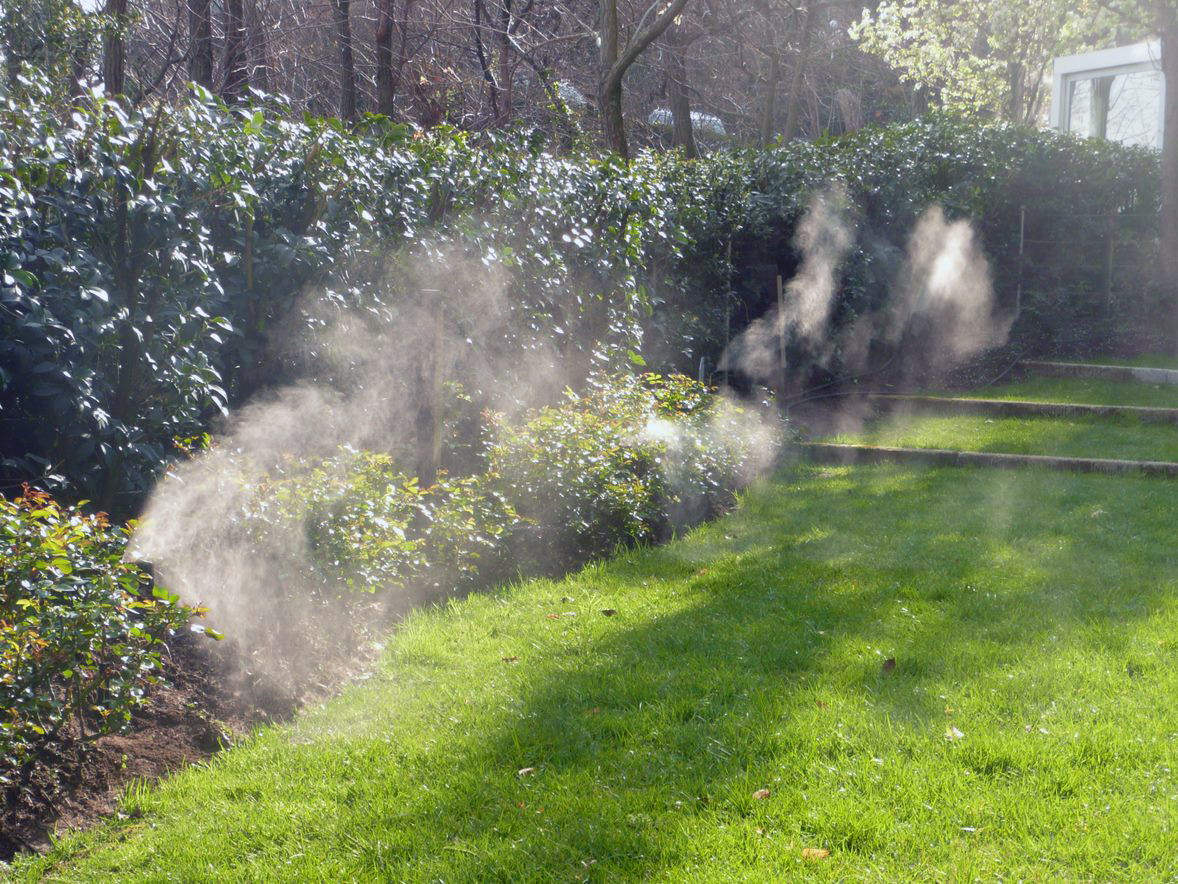
Nozzle placement is where system design decisions become most consequential. A nozzle aimed incorrectly can create drift toward dining surfaces, a pool, a pet area, or a neighboring property. One placed too high, or even in a spot exposed to consistent sea breeze may not deliver effective coverage. A well-designed layout positions nozzles at heights and angles that target the areas where insects are active, without creating unnecessary exposure to surfaces or people in the treated space.
Tank and pump placement should be handled with the same care. The equipment needs to be accessible for refills and service, protected from physical damage, connected to a power source, and placed in a location that does not compromise the appearance of the property. For homes in places like Greater Miami, Broward, Pinecrest, or Palm Beach to name just a few, where landscaping and exterior aesthetics are carefully maintained, a clean installation can be nearly as important as a functional one.
Where Systems Are Most Commonly Used on South Florida Residential Properties
Most residential systems in South Florida are designed around a combination of outdoor zones rather than a single treatment area. The specific layout depends on the property, but the areas that tend to benefit most from consistent mist coverage are those where people spend extended time and where the outdoor environment creates conditions mosquitoes prefer.
Pool decks and surrounding lounge areas are among the most common treatment zones. In South Florida, pools are used year-round, and the landscaping around them often includes shade-providing palms and planting beds that create favorable resting conditions for mosquitoes during the day. Evening pool use, when mosquito activity tends to peak, is where a well-placed system makes the most noticeable difference.
Covered patios, outdoor kitchens, and dining areas are another priority zone for most households. These spaces see concentrated evening use, often with guests present, and are typically sheltered enough that mist from nearby nozzles can be effective without significant drift. A system timed to run before a dinner gathering can meaningfully reduce biting pressure during outdoor entertaining.
Landscaped perimeter areas, including hedgerows, planting borders, fence lines, and the shaded edges of the front yard or backyard, serve as resting areas for mosquitoes during the day. Treating these zones is often what determines whether a system performs well throughout the property or only reduces pressure in the most immediate seating areas.
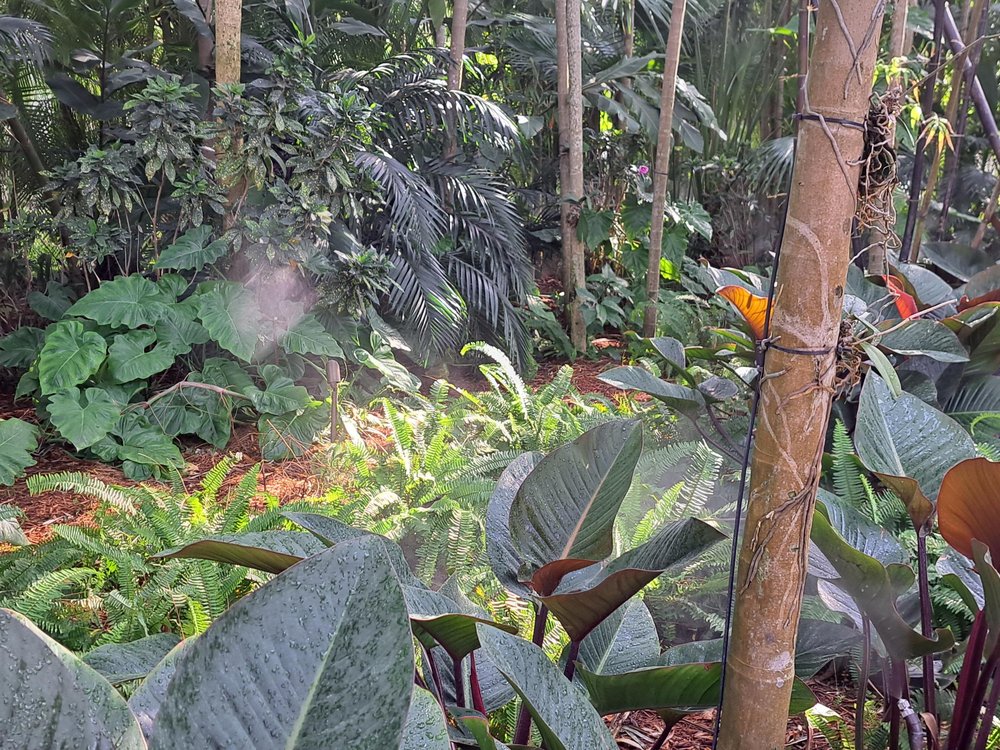
For waterfront properties across Biscayne Bay, the Intracoastal Waterway, Lake Worth Lagoon, and the canal systems throughout Miami-Dade and Broward, dock areas and yard edges facing the water often require closer attention. These spaces receive more consistent insect pressure from surrounding vegetation and standing water, and wind direction off the water can influence how nozzles should be aimed.
Side yards, covered pergolas, entry walkways, and children’s play areas are also incorporated into residential system designs when the household uses those spaces regularly. The layout should reflect the way the property is actually lived in.
South Florida’s Environment & What It Means for System Design
South Florida’s climate creates conditions where mosquito pressure is more consistent and more widespread than in most other parts of the country. Warm temperatures year-round, frequent afternoon rainfall, high humidity, and an abundance of standing-water sources mean that mosquito activity does not follow the seasonal patterns homeowners in other regions might be accustomed to managing.
- In Miami-Dade County, properties often combine dense tropical landscaping, canal adjacency, and outdoor spaces that are used heavily throughout the year. The urban canopy in neighborhoods like Coconut Grove, Pinecrest, and Coral Gables provides shade that is welcome during the day but also creates humid, protected areas where mosquitoes rest and shelter. System designs in this area often need to address both open outdoor spaces and the planted borders and shade zones that surround them.
- In Broward County, properties in communities around Ft Lauderdale like Weston, Plantation, and Parkland are often characterized by larger yards, lake or canal frontage, and significant landscaping. Waterfront exposure can increase the volume of incoming mosquitoes from surrounding natural areas, and wind patterns across open water can affect nozzle direction decisions during installation.
- Palm Beach County properties, from Wellington and Boca Raton to the Town of Palm Beach and the communities along the Intracoastal, often feature a combination of formal landscaping, large outdoor entertaining areas, and waterfront access that creates both high outdoor-use expectations and meaningful insect pressure. In communities where outdoor events and poolside entertaining are part of a regular social calendar, system reliability matters more than it might on a property used only occasionally.
- Monroe County, including Key Largo, Islamorada, Marathon, all the way down to Key West, presents a distinct set of design considerations. The Keys environment brings persistent no-see-um pressure alongside mosquitoes, saltwater exposure that affects outdoor equipment over time, and prevailing winds that require careful nozzle positioning. Properties in the Keys tend to have outdoor living as a central feature of the home, with docks, covered outdoor spaces, and open-air living areas that need consistent protection to be usable year-round.
A note on no-see-ums: In coastal and waterfront areas throughout South Florida, no-see-ums can be as significant a concern as mosquitoes. These insects are smaller and tend to be active in different conditions, particularly around dawn and dusk near water, damp soil, and beach or bay edges. A system designed with no-see-um pressure in mind may require different nozzle spacing and placement considerations than one designed primarily for mosquito control. Properties in the Keys, on the Intracoastal, or near coastal mangrove areas often benefit from a design that accounts for both.
What Residential Installation Looks Like
A residential mosquito misting system installation should begin with a property evaluation before any equipment is ordered or work begins. The technician should walk the outdoor areas with the homeowner, identify the main use zones, assess insect pressure points, confirm equipment placement, and agree on the nozzle layout and tubing route before installation starts. This step protects against surprises during installation and ensures the homeowner understands which areas will be covered and how the system will operate.
Once the layout is confirmed, the work typically involves mounting the tank and pump in the agreed location, routing tubing along eaves, fences, pergola frames, planting borders, or landscape edges, and placing nozzles at the planned positions. A clean installation should follow the natural lines of the home and property rather than running tubing visibly across open surfaces. For homes where exterior appearance is a priority, which describes most well-maintained properties in South Florida, installation quality and discreet routing are worth asking about before choosing a provider.
After equipment is in place, the system is programmed for scheduled operation based on the household’s routine and outdoor-use patterns, and the homeowner should receive a full walkthrough covering how the controller works, how to activate the system manually or remotely when available, and what to expect from ongoing service and refills.
Maintaining a Home Misting System in South Florida
A mosquito misting system is outdoor infrastructure, and like any outdoor system, it performs best with consistent service. In the state of Florida (and especially the southern part of the Sunshine State) where heat, humidity, UV exposure, salt air in coastal residential areas, and year-round operation are all common factors, regular maintenance is what keeps a system reliable over the long term. Routine service typically covers solution refills, nozzle inspection and cleaning, pump review, tubing and fitting checks, and confirmation that the controller is programmed correctly for current seasonal use. Nozzles can develop partial clogs that affect spray pattern without stopping the system entirely, which means the system appears to be running normally while coverage has actually declined. Regular inspection catches these issues before they affect performance.
Refill frequency depends on tank size, the number of nozzles in the system, how often the system cycles, and local insect pressure. South Florida’s year-round outdoor use means most residential systems run consistently throughout all twelve months rather than shutting down in cooler weather, which affects how frequently refills and service visits are needed compared to systems in seasonal climates.
South Florida homeowners should be aware that a home mosquito misting system works best alongside essential property upkeep. That is, containers, planters, gutters, drainage areas, tarps, and low spots around the yard can collect standing water that supports mosquito breeding regardless of how well the misting system is performing. Keeping those sources managed improves overall results.
Questions South Florida Homeowners Often Ask
- How long does installation take for a residential property? The timeline depends on the size of the outdoor area being covered, how many treatment zones the system includes, the complexity of the tubing route, and where the equipment will be placed. A straightforward residential system covering a pool deck and patio will typically be less involved than a larger property with multiple outdoor areas, waterfront access, and more complex landscaping. A property evaluation should confirm the expected installation timeline before work begins.
- Can a misting system be installed on a property with a screened enclosure? Pool cages and screen enclosures are common throughout South Florida, and they do affect system design. Treatment zones outside the screen, along fence lines, in landscaped borders, and around the exterior of the enclosure can still be addressed. The layout should reflect where biting pressure actually occurs and where outdoor time is spent outside the screened area.
- Is the equipment visible once installed? Tubing and nozzles are present on the property after installation, and a well-designed system routes them along existing structural lines so they integrate into the property’s appearance rather than standing out. Tank and pump equipment is typically placed in a location that is accessible for service but not prominently visible from main outdoor living areas. How discreet the final installation looks depends on the care taken during the design and routing process.
- What if a system was already installed by a previous owner or another company? Existing systems can often be evaluated, serviced, and placed on a maintenance and refill schedule without requiring a full reinstall. The system should be inspected first to assess the condition of the pump, tank, tubing, nozzles, and controller before ongoing service begins, since equipment condition and original installation quality can vary significantly.
- Does the system run while people are outside? Most residential systems are programmed to cycle at times when outdoor activity is lower, typically early morning and around dusk. Manual or remote activation options allow homeowners to run a cycle before heading outside rather than during active use. Programming should reflect the household’s actual schedule, which is something to discuss with the installer during the walkthrough.
Choosing an Installer for a Home Mosquito Misting System in South Florida
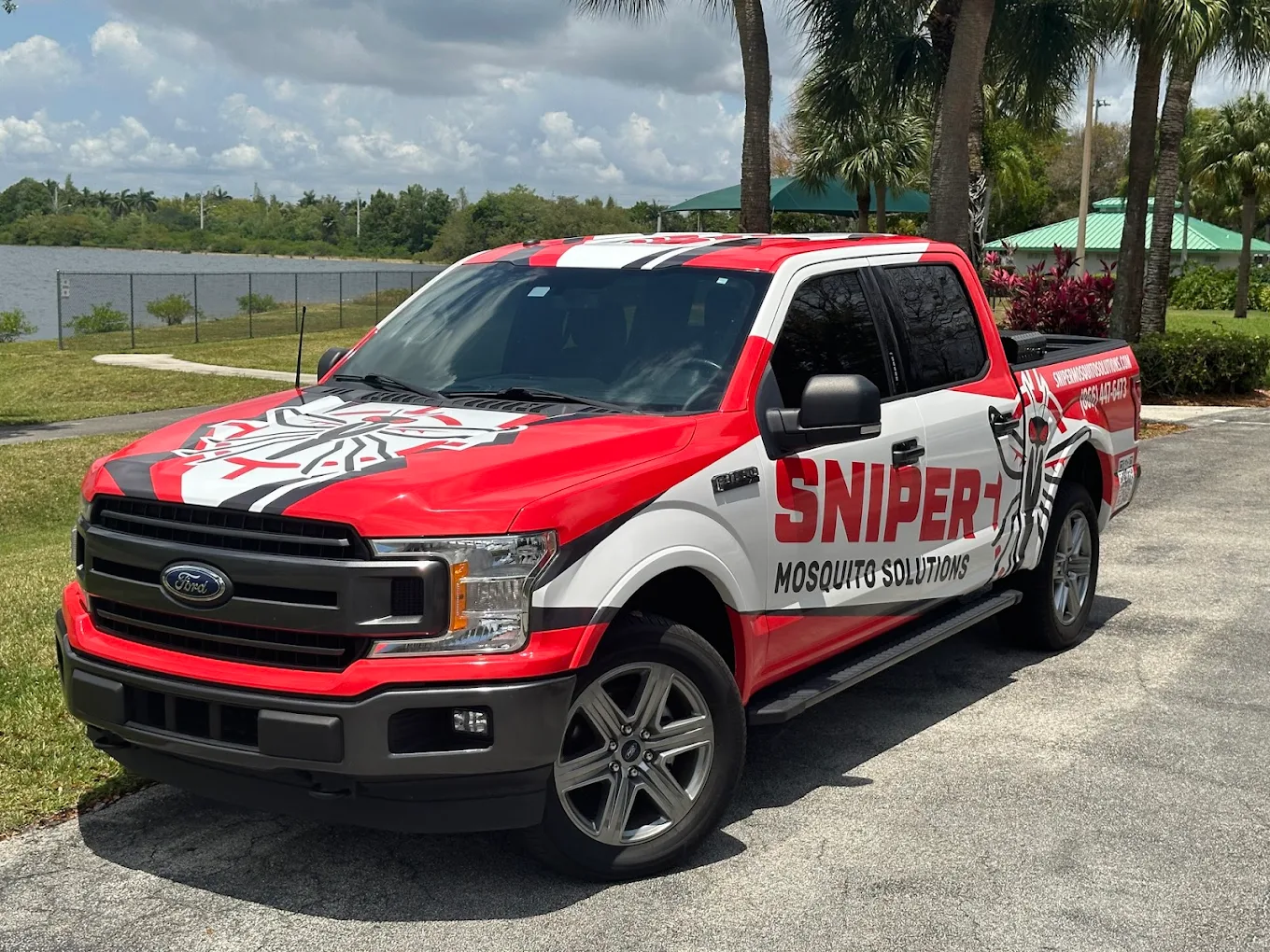
The installation and long-term service of a home mosquito misting system are worth evaluating carefully, since the system’s performance over time depends as much on the quality of the initial design as on the equipment itself. Mosquito misting system installers who take the time to walk the property, discuss your household’s outdoor use patterns, and explain the layout before installation begins are more likely to deliver a system that performs consistently than one who arrives with a standard package and a fixed nozzle count.
Long-term service access matters as well. A system that cannot be reliably refilled and serviced will eventually underperform, and finding a different provider to take over an existing system mid-service can introduce delays and inconsistency. Before installation, it is worth confirming that the company services the specific area of South Florida where the property is located and can commit to a regular maintenance and refill schedule.
Sniper Mosquito Solutions installs and services automatic misting systems across all of South Florida, including Miami-Dade, Broward, Palm Beach, and Monroe counties.