
South Florida rain does not create adult mosquitoes instantly, but it creates or refills the water habitats their immature stages need. It can also flood mosquito eggs that were already waiting in soil, containers, drainage areas, and low parts of a property. During August, repeated afternoon storms and tropical weather can overlap these cycles, making mosquito pressure feel continuous around patios, pool decks, outdoor kitchens, docks, restaurant seating, and community amenities. The best response combines fast standing-water removal, inspection of hidden breeding areas, personal bite prevention, and property-specific adult mosquito control. An automated mosquito misting system installation and service plan can help reduce adult mosquito pressure around selected outdoor zones, but it does not replace drainage, source reduction, or responsible system maintenance.
Why Mosquitoes Increase After Rain
Rain increases mosquito pressure in three ways: it creates new breeding water, floods eggs that were already present, and leaves behind humid resting conditions for existing adults. A hard storm may temporarily reduce mosquito flight, but the effect several days later can be very different from the conditions during the storm itself.
| What the Rain Changes | What Happens | What the Property Owner Notices |
|---|---|---|
| Containers fill with water | Buckets, planters, gutters, toys, tarps, covers, and yard equipment become aquatic mosquito habitats. | Mosquito activity begins increasing several days after repeated rainfall. |
| Low areas flood | Eggs laid in moist soil or temporary flood zones can hatch when water rises. | A large wave of nuisance mosquitoes may appear even on a well-maintained property. |
| Humidity remains high | Shaded vegetation and protected exterior areas stay damp and favorable for adult mosquito resting. | More mosquitoes are encountered around hedges, patios, side yards, and covered spaces. |
| Storms repeat | New breeding sites form before earlier sites have dried or been emptied. | Multiple mosquito generations overlap and the problem appears constant. |
| Debris blocks drainage | Leaves, palm material, sediment, and storm debris trap water in gutters, drains, and landscape features. | Water remains long after the visible puddles have disappeared. |
Not every mosquito uses the same habitat. Some lay eggs in small containers, some use standing water such as neglected pools or drainage systems, and others lay eggs in areas that remain dry until rainfall or flooding arrives. That is why removing one obvious bucket may help without fully resolving the property’s mosquito pressure.
What Happens During the Days After a Storm
The increase in mosquito activity usually follows a sequence rather than occurring all at once. Exact timing varies by species, temperature, water quality, and weather, but South Florida warmth can support rapid development once eggs and larvae have access to water.
| Time After Rain | Likely Mosquito Activity | Best Property Response |
|---|---|---|
| During the storm | Many adult mosquitoes shelter in vegetation, under structures, and in other protected areas. Strong wind and rain may temporarily suppress flight. | Wait until conditions are safe before inspecting the property. |
| First 24 hours | Containers, covers, gutters, drains, and low areas hold fresh rainwater. Floodwater eggs may begin hatching. | Identify where water collected and begin draining, turning over, covering, or cleaning those areas. |
| Days 2–4 | Larvae may be developing in water that remains undisturbed. Existing adults resume normal activity around shaded areas. | Recheck hidden containers, gutters, plant saucers, tarps, bromeliads, and drainage areas. |
| Days 5–10 | Under favorable conditions, some developing mosquitoes may reach the adult stage and begin adding to the biting population. | Continue source reduction and evaluate whether recurring adult pressure requires professional service. |
| After repeated storms | Newly filled habitats overlap with older breeding sites, producing continuing waves rather than one isolated increase. | Use a scheduled inspection routine instead of treating each storm as a separate event. |
The practical takeaway is to act before the new adults appear. Waiting until mosquito bites become noticeably worse gives water-holding habitats more time to produce another generation.
Why August Can Feel Relentless in South Florida
August can produce sustained mosquito pressure because storms may arrive faster than properties can fully dry. One afternoon storm fills a planter or pool cover, another adds water two days later, and irrigation keeps shaded areas damp between rainfall events.
Several conditions can overlap during this part of the year:
- Frequent rainfall: Containers and low areas refill soon after they are emptied.
- Warm temperatures: Mosquito eggs, larvae, and pupae can develop quickly when suitable water remains available.
- Dense vegetation: Hedges, palms, ground cover, and shaded planting beds give adult mosquitoes protected resting areas.
- Tropical weather: Storm preparation and cleanup can introduce tarps, buckets, debris, temporary containers, and blocked drainage.
- Year-round outdoor use: Pool decks, patios, docks, restaurant terraces, and community spaces remain active even when mosquito pressure is high.
- Coastal exposure: Waterfront and mangrove-adjacent properties may experience both mosquito and no-see-um activity.
The repeated nature of the rain matters more than one isolated storm. A single rainfall event may be manageable, while several wet weeks can maintain breeding and resting conditions across an entire neighborhood.
Where Rainwater Hides Around South Florida Properties
The most productive mosquito habitats are often small, shaded, and easy to overlook. A property can look dry from the patio while water remains in gutters, plant structures, covers, drainage features, or equipment stored along the side of the house.
| Property Area | Places to Inspect | Recommended Action |
|---|---|---|
| Roof and gutters | Clogged gutters, downspout extensions, flat roof areas, scuppers, and roof drains. | Remove debris and confirm that water moves away from the structure. |
| Pool and patio | Pool covers, furniture covers, umbrella bases, toys, floats, planters, drains, and decorative containers. | Dump collected water, clean containers, and correct covers that form pockets. |
| Landscaped areas | Plant saucers, bromeliads, tree holes, edging, clogged drains, irrigation boxes, and low lawn areas. | Drain where possible and evaluate persistent drainage or water-holding plant issues. |
| Outdoor storage | Buckets, wheelbarrows, watering cans, bins, tools, children’s toys, and unused pots. | Turn items over, store them under cover, or discard what is no longer needed. |
| Waste and recycling | Trash can lids, recycling bins, discarded containers, appliance parts, and loose debris. | Keep containers covered and remove objects that trap water. |
| Boats and waterfront areas | Boat covers, dock boxes, kayaks, canoes, bait containers, shore equipment, and folded tarps. | Adjust covers so they drain and empty equipment after rainfall. |
| Commercial and HOA spaces | Planters, service corridors, roof drains, pool furniture, outdoor bars, maintenance yards, and common-area storage. | Assign inspection responsibility and document recurring water locations. |
| Mechanical areas | Air-conditioning drainage, irrigation leaks, utility boxes, hose connections, and equipment pads. | Correct leaks and investigate water that returns without rainfall. |
Water does not need to cover a large area to support mosquito development. The number of small water-holding objects around a property can matter more than one visible puddle in the lawn.
A 48-Hour Post-Rain Mosquito Checklist
The first two days after substantial rain provide a practical opportunity to remove new habitats before immature mosquitoes have time to complete development. The inspection should cover the entire property, including side yards, utility areas, roof drainage, storage zones, and spaces that are not visible from the main patio.
- Wait until the property is safe. Do not enter floodwater, approach damaged electrical equipment, climb onto wet roofs, or inspect unstable storm debris.
- Walk the property from high areas to low areas. Follow the path rainwater takes from the roof, through gutters and drains, and toward the lowest portions of the yard.
- Empty movable containers. Dump water from buckets, toys, planters, furniture covers, trash lids, coolers, and yard equipment.
- Scrub reusable containers. Emptying water removes larvae, but scrubbing can also remove eggs attached to the interior surface near the water line.
- Turn over or cover stored items. Prevent the next storm from refilling wheelbarrows, bins, pots, tarps, and other outdoor equipment.
- Clear gutters and drainage points. Remove leaves, palm material, sediment, and debris that slow water movement.
- Check pool-related areas. Maintain pool circulation and chemistry, empty unused children’s pools, and remove water from pool covers and surrounding equipment.
- Refresh birdbaths and pet water. Empty, clean, and replace the water rather than only adding fresh water to the existing container.
- Address water that cannot be drained. Use only a product labeled for that type of water and application, or have the area evaluated by a qualified professional.
- Check irrigation settings. Reduce unnecessary irrigation after heavy rainfall and repair leaks that keep parts of the property wet.
- Inspect screens and outdoor barriers. Repair damaged door, window, porch, or patio screens that allow mosquitoes into occupied areas.
- Record recurring problem areas. Water that repeatedly returns to the same location may indicate a drainage, grading, irrigation, or maintenance problem.
This process works best as a routine. During extended wet periods, one inspection after a single storm is not enough because the next rainfall can recreate the same habitats.
Why a Clean Yard Can Still Have Heavy Mosquito Pressure
Removing standing water is necessary, but it does not guarantee that every mosquito affecting the property originated there. Adult mosquitoes can enter from neighboring lots, public drainage areas, canals, undeveloped land, marshes, neglected pools, and other nearby habitats.
Persistent pressure can continue for several reasons:
- Nearby breeding habitat: A neighboring property or common area may contain water that the homeowner cannot access.
- Floodwater emergence: Rain may activate eggs distributed across temporary pools, swales, ditches, or low natural areas.
- Adult resting zones: Dense vegetation can hold mosquitoes that developed elsewhere.
- Hidden water: Roof drains, catch basins, utility structures, or covered storage areas may remain wet without being visible.
- Recurring irrigation: A leak or excessive watering schedule can maintain habitat even during a break in rainfall.
- Different biting insects: Some perceived mosquito pressure may actually come from no-see-ums or other small biting flies.
Source reduction should therefore be treated as the foundation of control, not as proof that no additional strategy will be needed.
Mosquitoes and No-See-Ums Do Not Use the Same Habitat
No-see-ums are biting midges, not miniature mosquitoes. The distinction matters because the standard advice to empty buckets and planters is directed mainly at mosquitoes. Many no-see-um species associated with coastal South Florida develop in wet soil, salt marshes, swamps, mangroves, tree holes, or other damp organic habitats that cannot be managed like a backyard container.
| Characteristic | Mosquitoes | No-See-Ums |
|---|---|---|
| What they are | Flies in the mosquito family. | Very small biting midges in a different insect family. |
| Common immature habitat | Standing water, containers, temporary flood areas, drains, neglected pools, and other aquatic sites. | Wet soil, marshes, mangroves, swamps, tree holes, and damp organic material, depending on species. |
| Visible clue | The insect is usually visible while flying or resting. | The insect may appear only as a tiny speck or may not be noticed before the bite. |
| Effect of emptying containers | Can directly remove mosquito eggs, larvae, and pupae from many household habitats. | May have little effect when the source is a coastal marsh, wet soil, mangrove edge, or other natural habitat. |
| Property-control focus | Source reduction, water management, barriers, bite prevention, and targeted adult control. | Identification, property-specific adult pressure reduction, barriers, and design that accounts for coastal habitat and wind. |
Waterfront and coastal properties may experience both problems at the same time. A property evaluation should identify the likely biting insect before the owner assumes that every small bite is caused by a mosquito breeding somewhere in the yard.
How a Mosquito Misting System Fits Into Post-Rain Control
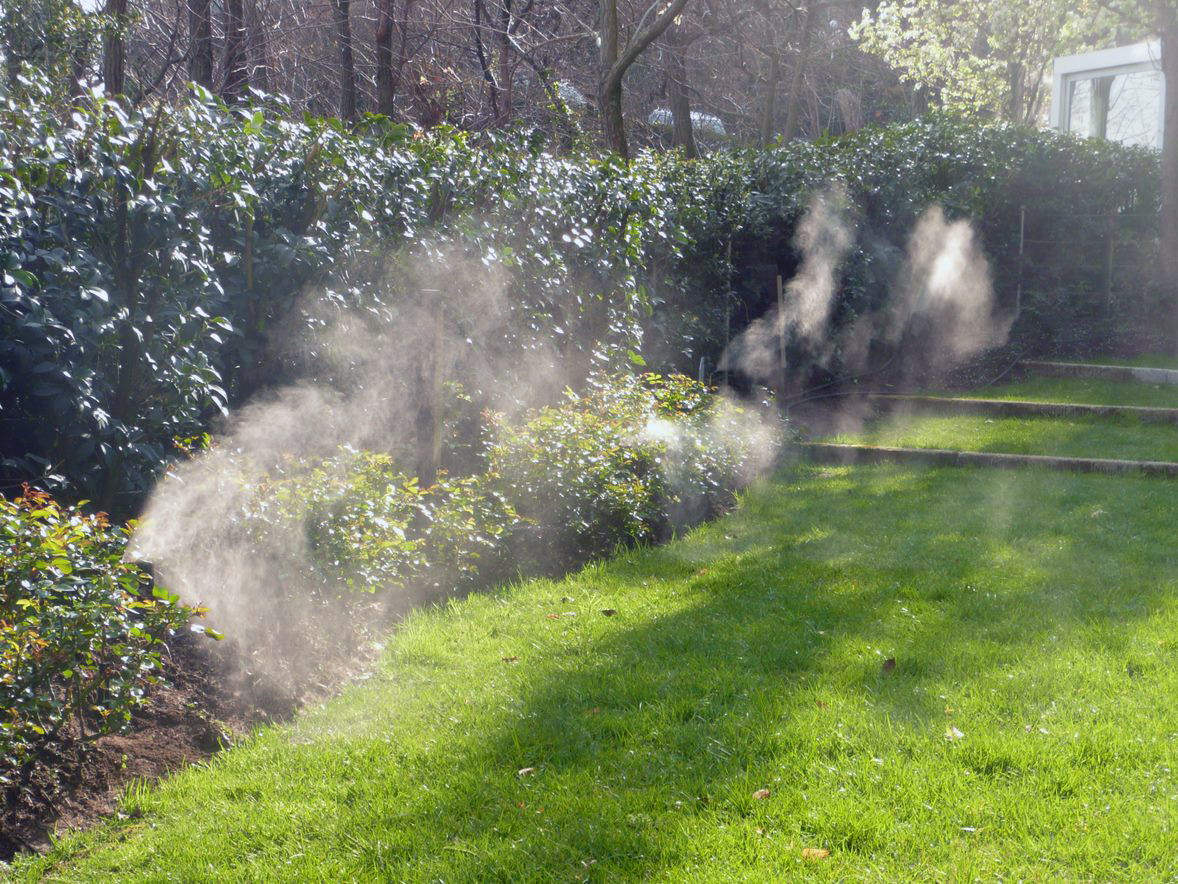
A mosquito misting system is an adult-control tool for selected outdoor zones. It does not remove standing water, repair drainage, or prevent every mosquito from entering the property. Its role is to help reduce adult biting pressure around areas such as patios, pool decks, outdoor kitchens, fence lines, vegetation edges, restaurant seating, docks, and community amenities.
A complete post-rain strategy separates the different control jobs:
- Source reduction: Removes containers and other habitats before immature mosquitoes become adults.
- Water management: Corrects drainage, irrigation, cover, gutter, and maintenance problems.
- Larval control: Addresses water that cannot be drained when a properly labeled product or public mosquito-control response is appropriate.
- Adult control: Reduces existing adult pressure around defined outdoor-use areas.
- Personal protection: Uses screens, clothing, and appropriate repellents to reduce bites.
Professional design matters because rain-related mosquito pressure is not distributed evenly across a property. Shaded plant borders, covered patios, canal-facing yards, pool areas, breezeways, and outdoor dining spaces may all require different nozzle placement. The guide to mosquito misting systems for homes and backyards explains how residential layouts are built around the way each property is used.
More misting is not automatically better after rain. Increasing cycle frequency or run time without checking the product label, system settings, property use, and equipment condition can waste product and create unnecessary application. Programming changes should be based on an actual system and property evaluation.
How to Check an Existing Misting System After Heavy Weather
Heavy rain, wind, falling vegetation, power interruptions, maintenance work, and storm cleanup can affect an outdoor misting system. Property owners should visually check the system after severe weather and request service when output, pressure, direction, or programming appears different.
| What You Notice | Possible Cause | Recommended Response |
|---|---|---|
| The system does not run | Power interruption, controller reset, pump problem, empty tank, or equipment damage. | Check accessible controller information and request service rather than repeatedly triggering the system. |
| Mist output is weak or uneven | Clogged nozzles, low pressure, damaged tubing, loose fittings, or a low solution level. | Schedule a nozzle, pump, tubing, and tank inspection. |
| A new wet spot appears near a line | Cracked tubing, a loose fitting, physical damage, or a leaking connection. | Disable the system according to its operating guidance and arrange repair. |
| Nozzles point in a different direction | Wind, falling debris, cleaning, plant growth, construction, or accidental contact. | Have the direction and coverage pattern corrected before normal operation resumes. |
| The tank empties faster than expected | A leak, added cycles, changed programming, excessive use, or a component problem. | Review programming and inspect the system for leaks or abnormal consumption. |
| Vegetation blocks the mist | Fast summer plant growth has changed the original treatment path. | Prune appropriately or have nozzle placement adjusted to the current property conditions. |
| Coverage no longer reaches a use area | Furniture, screens, renovations, new planting, or a changed patio layout has altered the treatment zone. | Request a coverage review instead of adding unplanned misting cycles. |
Routine inspection, refill service, nozzle cleaning, pump review, and controller checks are covered in Sniper’s mosquito misting system maintenance and refill guide.
Common Mosquito-Control Mistakes After Rain
Most post-rain mistakes come from reacting only to the adult mosquitoes that are already biting. The more effective response addresses the water, the immature life stages, the adult resting areas, and the condition of any installed control equipment.
- Assuming the storm washed the problem away: Rain and wind may reduce immediate flight while leaving behind new breeding habitats.
- Waiting until bites increase: Delaying the property inspection gives larvae more time to develop.
- Dumping water without cleaning the container: Mosquito eggs may remain attached near the previous water line.
- Checking only the backyard: Side yards, utility areas, roof drainage, boat equipment, and commercial service zones are frequently overlooked.
- Ignoring irrigation: A system that resumes normal watering immediately after heavy rain can extend wet conditions unnecessarily.
- Applying an unlabeled product to water: Water that cannot be drained should only be treated with a product specifically labeled for that use.
- Increasing misting cycles without evaluation: Programming should follow product directions and property-specific service guidance.
- Treating only open lawn: Adult mosquitoes often rest in shaded, protected vegetation rather than exposed sunny areas.
- Assuming every bite is from a mosquito: Coastal properties may also be affected by no-see-ums, which require different habitat considerations.
- Ignoring neighborhood-scale sources: Public drainage, abandoned pools, unmanaged common areas, and nearby flood zones may require local mosquito-control involvement.
When to Contact Local Mosquito Control and When to Contact a Private Provider
Local mosquito-control programs and private mosquito misting companies serve different functions. County or district programs address community-scale mosquito conditions, while a private provider designs and maintains control around a specific home or commercial property.
| Situation | Best Starting Point | Reason |
|---|---|---|
| Neighborhood-wide mosquito surge after flooding | Local mosquito-control program | The source may extend across public land, drainage systems, wetlands, or multiple properties. |
| Standing water in a public ditch, storm drain, or right-of-way | Local government or mosquito-control program | The property owner may not have authority or equipment to correct the source. |
| Neglected pool or major breeding source on another property | Local code, health, or mosquito-control program | The issue may require public inspection or enforcement. |
| Recurring pressure around a private pool deck, patio, dock, or outdoor kitchen | Private mosquito-control provider | The need is focused on specific private outdoor-use zones. |
| New automated misting system | Qualified misting-system installer | The system requires property evaluation, custom layout, equipment placement, and programming. |
| Existing system needs refills, repair, or provider transition | Misting-system service company | The equipment needs inspection, maintenance, and an ongoing service plan. |
Sniper provides installation and service throughout its South Florida mosquito misting service areas. Public and private control can work alongside each other because neighborhood surveillance does not replace property maintenance, and private misting does not replace community mosquito management.
Related Mosquito Misting Topics
Rain-related mosquito pressure connects directly to system design, maintenance, cost, and residential property use. These supporting guides address the next questions owners commonly have after determining that standing-water cleanup alone is not enough.
Mosquito Misting Systems for Homes and Backyards
A residential system should be designed around the pool deck, patio, outdoor kitchen, vegetation, property boundaries, waterfront exposure, and the way the household uses the yard. The home and backyard misting system guide explains how equipment and nozzles are arranged for residential outdoor spaces.
Mosquito Misting System Maintenance and Refills
Rain, wind, plant growth, outdoor work, and year-round use can change system performance. The maintenance and refill guide covers tanks, pumps, nozzles, tubing, controllers, inspections, and existing-system service.
Mosquito Misting System Cost
Installation and ownership costs depend on nozzle count, equipment placement, tubing routes, property size, treatment zones, and service requirements. The guide to mosquito misting system cost in South Florida explains what should be included in a property-specific estimate.
Mosquito Misting System Installation and Service
Sniper installs new systems, provides refills and maintenance, and evaluates equipment installed by other providers. The main mosquito misting installation and service page covers residential systems, commercial properties, and service transitions.
Common Questions
These answers address the questions South Florida property owners most often ask when mosquito activity increases after summer rain, thunderstorms, tropical weather, or flooding.
Why are mosquitoes worse after it rains?
Rain fills containers, drains, low areas, and temporary pools where mosquito eggs can hatch and larvae can develop. It can also flood eggs that were laid before the storm. High humidity and wet vegetation provide favorable resting conditions for adults. The increase is often noticed several days after rainfall rather than during the storm itself.
How long after rain do new mosquitoes appear?
The timing varies by mosquito species, temperature, and habitat. Eggs can hatch soon after suitable water arrives, while the immature stages may develop into adults in roughly a week under favorable conditions or take longer when conditions are less suitable. Property inspection should therefore begin within the first day or two instead of waiting for more bites.
Does heavy rain kill mosquitoes?
Heavy rain and strong wind can temporarily reduce adult mosquito flight and may kill or displace some adults. That does not end the problem. Rain also creates standing water and floods dormant eggs, which can produce a later wave of mosquitoes. The immediate conditions during a storm and the conditions several days afterward are often very different.
Can mosquitoes breed in a swimming pool?
A properly maintained, circulating swimming pool is less suitable than stagnant water, but neglected pools can become major breeding habitats. Water can also collect on pool covers, in toys, drains, furniture bases, planters, and equipment around the pool deck. Those smaller sources should be emptied and cleaned after rainfall even when the main pool is maintained.
Should I increase my mosquito misting schedule after rain?
Do not automatically add cycles or increase run times after every storm. System programming should account for the product label, property use, mosquito pressure, equipment condition, weather, and nozzle layout. More frequent application is not a substitute for removing standing water. Have the system reviewed when current settings no longer appear to match the property’s needs.
What should I do with standing water that cannot be drained?
Correct the drainage or maintenance issue when possible. For water that must remain, use only a larvicide or control product specifically labeled for that location and follow all directions. Do not apply products to drinking water or an unapproved site. Public drainage, neglected pools, and neighborhood-scale sources may require local mosquito-control assistance.
Why do I still have mosquitoes after removing standing water?
The adults may be entering from neighboring properties, canals, drainage systems, wetlands, common areas, or other nearby habitats. Mosquitoes may also be resting in dense vegetation on the property, and hidden water may remain in gutters, drains, covers, or utility areas. Source reduction lowers local production but may not eliminate incoming adult pressure.
What should I check after a tropical storm or hurricane?
Wait until the property is safe, then inspect gutters, drains, containers, tarps, pool covers, boat equipment, debris, low areas, and outdoor storage. Check an existing misting system for power loss, damaged tubing, shifted nozzles, leaks, or controller resets. Report public drainage or widespread mosquito problems to the appropriate local program.
Mosquitoes become worse after South Florida rain because storms create standing water, flood waiting eggs, and maintain humid resting conditions. The most effective response begins within the first two days: drain and clean containers, clear gutters and drains, inspect hidden areas, manage irrigation, maintain pools, and document recurring water problems. A professionally designed mosquito misting system can help reduce adult pressure around private outdoor-use areas, but it should operate as one part of a broader control plan. Sniper Mosquito Solutions installs, maintains, refills, and services automated systems for South Florida homes and businesses. A property-specific evaluation can determine whether an existing system needs service or a new system fits the property.